







“..So I want you to know, as a friend and lover, that in my heart and arms you’ll always stay,
for our love for each other will never fade.” by Joe Vieira.
Love poems have been making hearts flutter for centuries.
Poets have been putting these feelings into words since, well, forever. It’s surprisingly amusing how a feeling can. be expressed so well in just words.
Are you looking for poems about love? Here are a few that might resonate with your feelings.
What are Love Poems?
They are pieces of writing that express romantic feelings, emotions, and experiences. They capture everything from the rush of a first crush to the comfort of a long-term partnership.
And yes, even the pain of heartbreak.
A good love poem can make you feel seen, understood, or just plain giddy.
Shakespeare’s sonnets, in modern verse, have always made us feel the butterflies, the longing, the joy of finding someone who just gets you.
They put words to feelings we sometimes can’t express.
Why do Poems About Love Never Lose Their Power?
Romantic poems stick around because love itself never changes.
We swipe right now instead of writing letters, but that nervous excitement before a first date? The way your heart skips when they walk in?
That’s the same feeling people had centuries ago.
These poems give voice to emotions that transcend time and culture. When you read a love poem from the 1800s and think “that’s exactly how I feel,” you’re connecting with someone across history.
The right words can evoke deep feelings, and love is the deepest of all.
Plus, love poems capture what we struggle to say out loud. Good poetry just hits different.
Romantic Love Poems You Cannot Forget
They come in all forms, sonnets, free verse, haikus, you name it. Some rhyme, some don’t.
But they all share one thing: they’re about the universal experience of loving and being loved.
1. She Walks in Beauty by Lord Byron

Lord Byron sees a woman who’s perfectly balanced, dark and bright, graceful and natural.
He’s not just talking about physical beauty; he’s mesmerized by how her outer grace reflects inner peace.
It’s written after seeing a woman at a party wearing a black mourning dress with sparkling sequins.
2. Wild Nights – Wild Nights! by Emily Dickinson
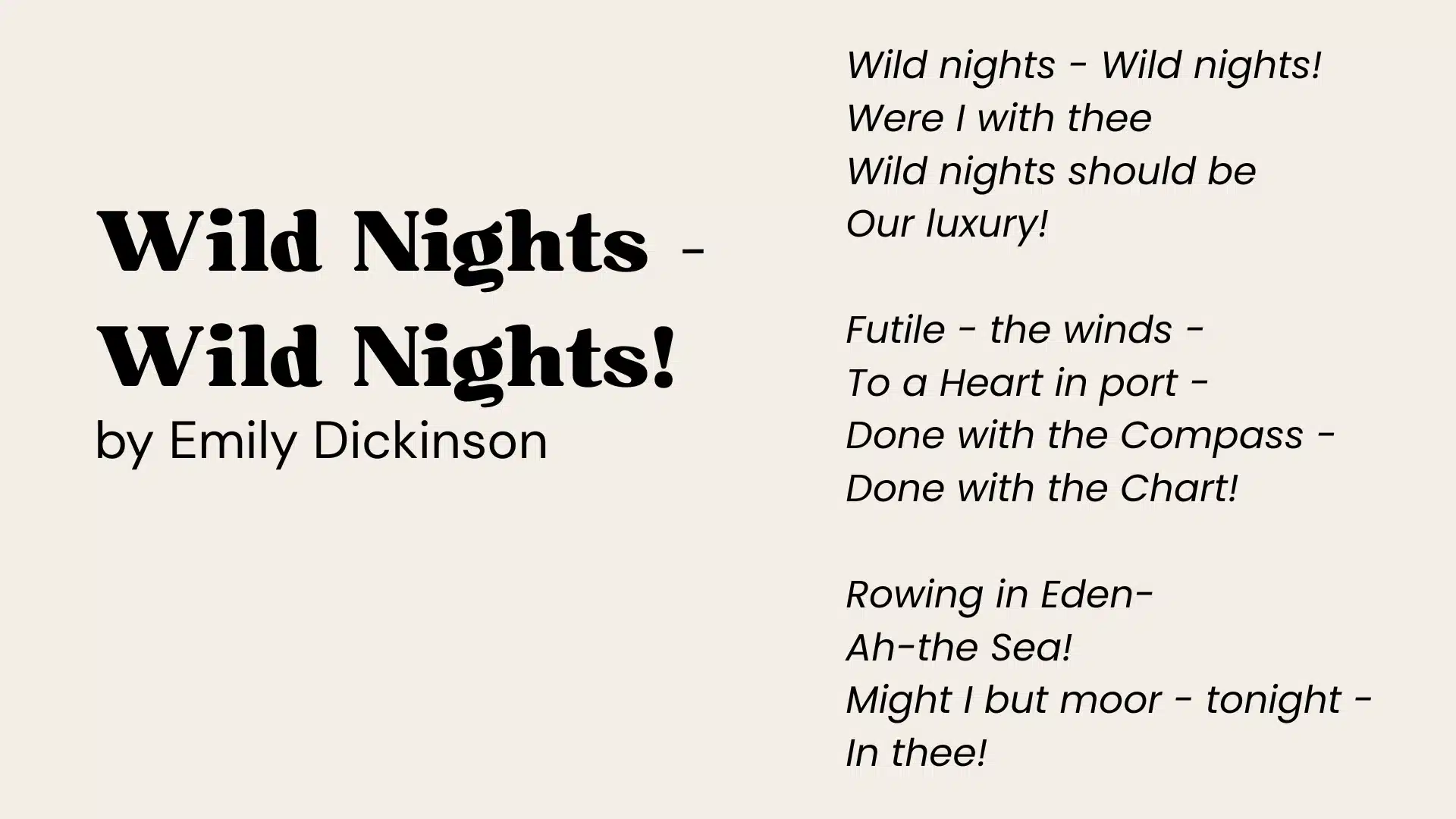
Emily Dickinson gets intense here.
Behind her proper Victorian exterior, she’s writing about desire and longing with sailing metaphors.
“Rowing in Eden” with her beloved. It’s sensual, it’s passionate, and it shocked people when they realized quiet Emily had this fire inside her.
3. I Carry Your Heart with Me By E.E. Cummings
Edward Estlin Cummings breaks every grammar rule to show how love breaks down barriers. His beloved isn’t just important; they’re literally part of him, carried everywhere.
“You are whatever a moon has always meant” captures how love redefines everything.
4. Meeting at Night by Robert Browning
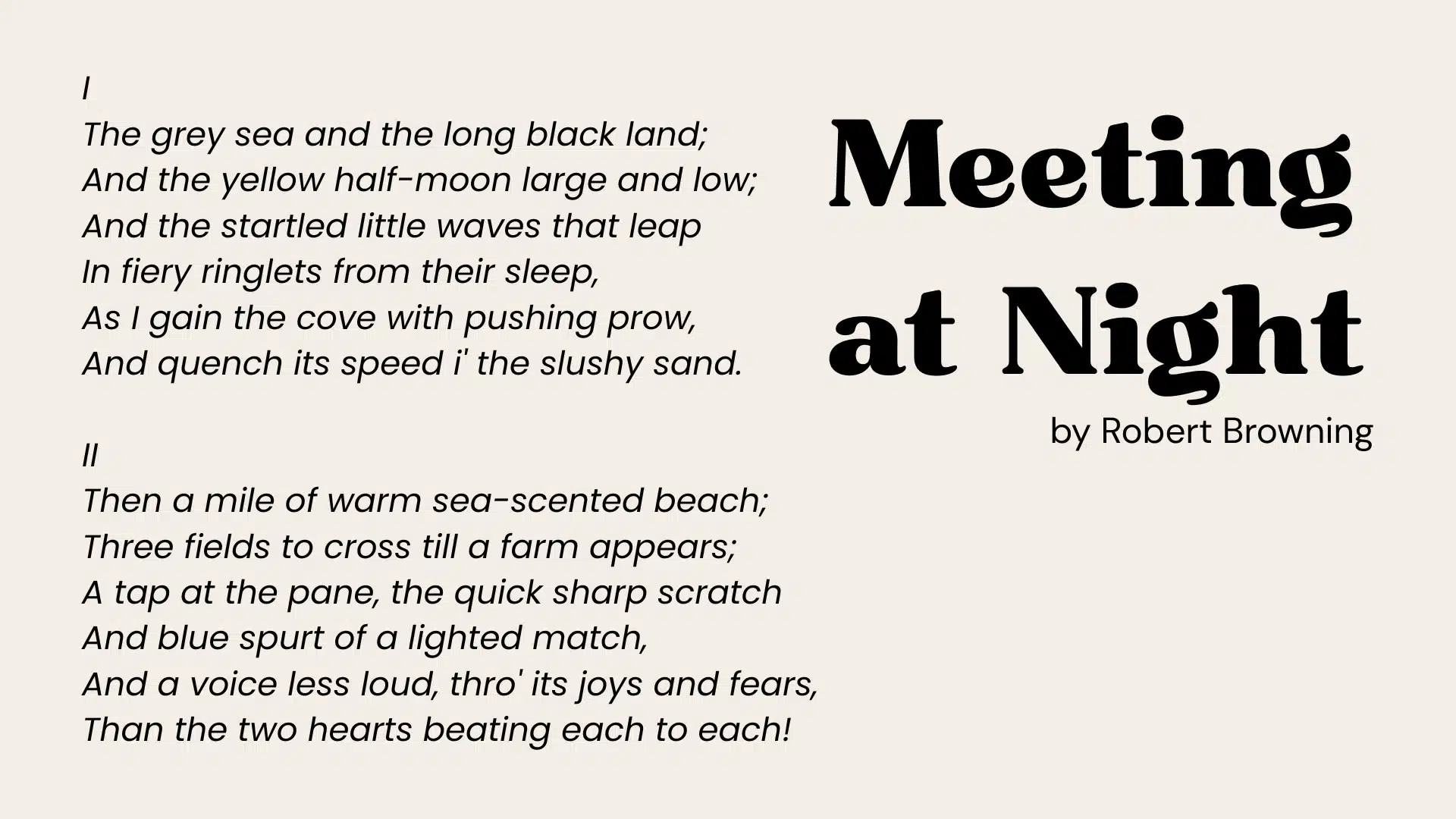
Pure sensory romance. Browning describes a secret nighttime journey across water and land to reach his lover.
The poem ends with “two hearts beating each against each other”, no more words needed.
Robert Browning created the perfect atmosphere, anticipation, and moment.
Built a pure connection instantly.
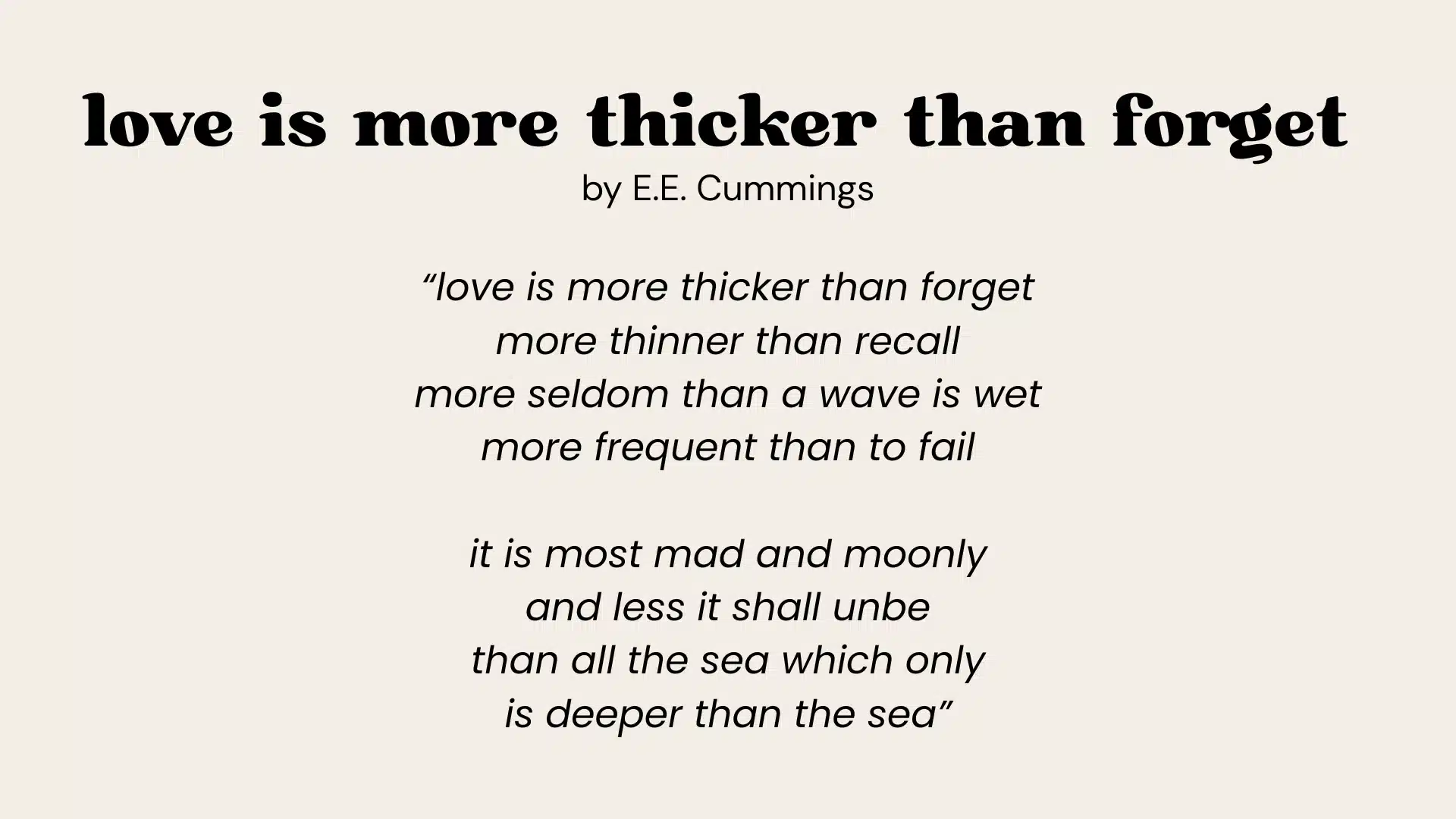
5. Love is More Thicker than Forget by E.E. Cummings
Cummings uses paradoxes to capture what love actually is: thicker than forget, thinner than recall, deeper than the sea.
He’s saying love defies logic and language. It’s everywhere and nowhere, simple and complex.
Only Cummings could make “more thicker” sound profound and perfect.
6. Love Poem by John Frederick Nims
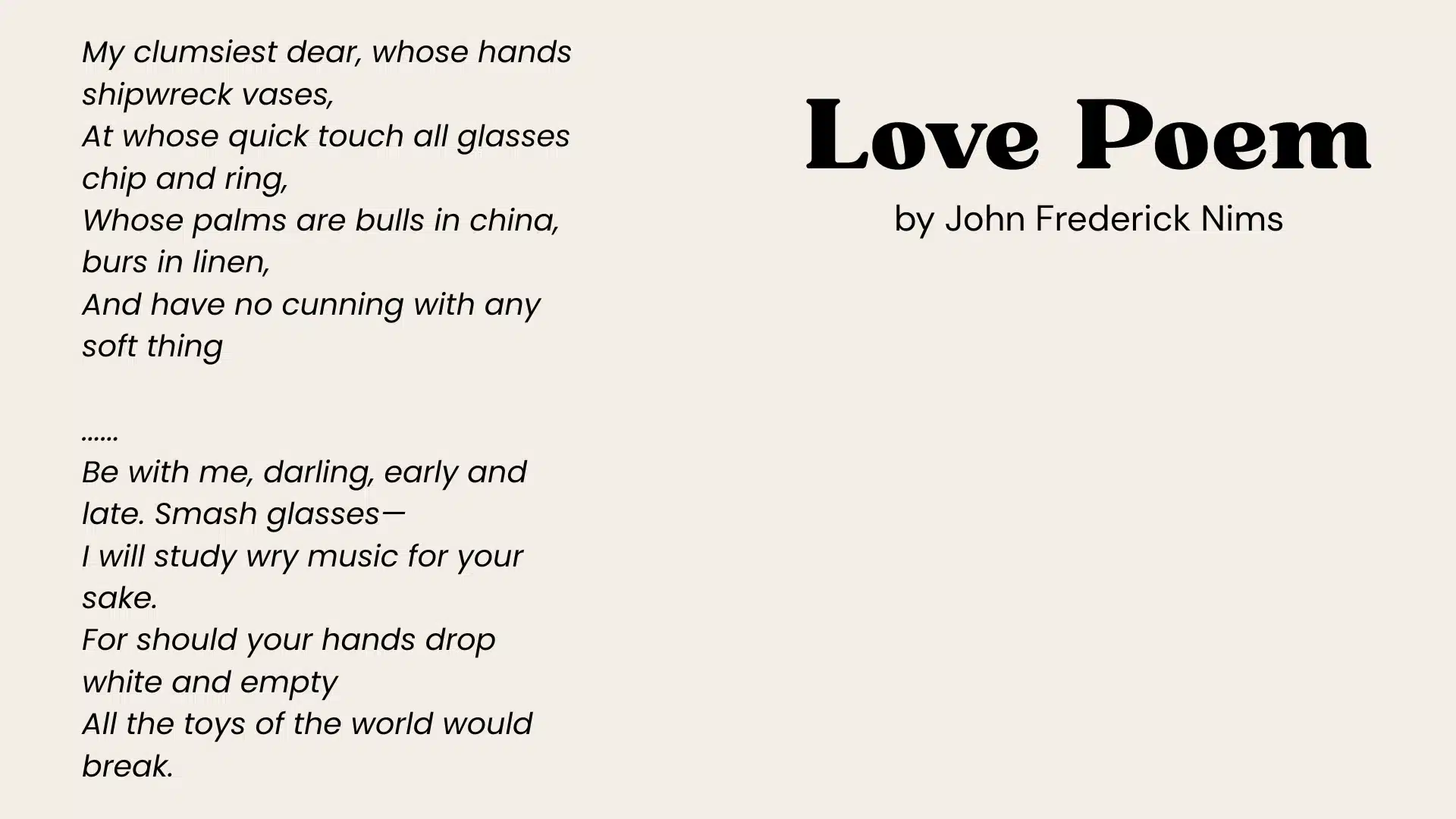
John Frederick Nims celebrates his clumsy, imperfect beloved who breaks things and causes chaos.
“Be with me, darling, early and late” because her flaws make life interesting.
It’s refreshingly honest. Real love isn’t about perfection; it’s about loving someone’s messy, beautiful reality.
7. The Flea by John Donne
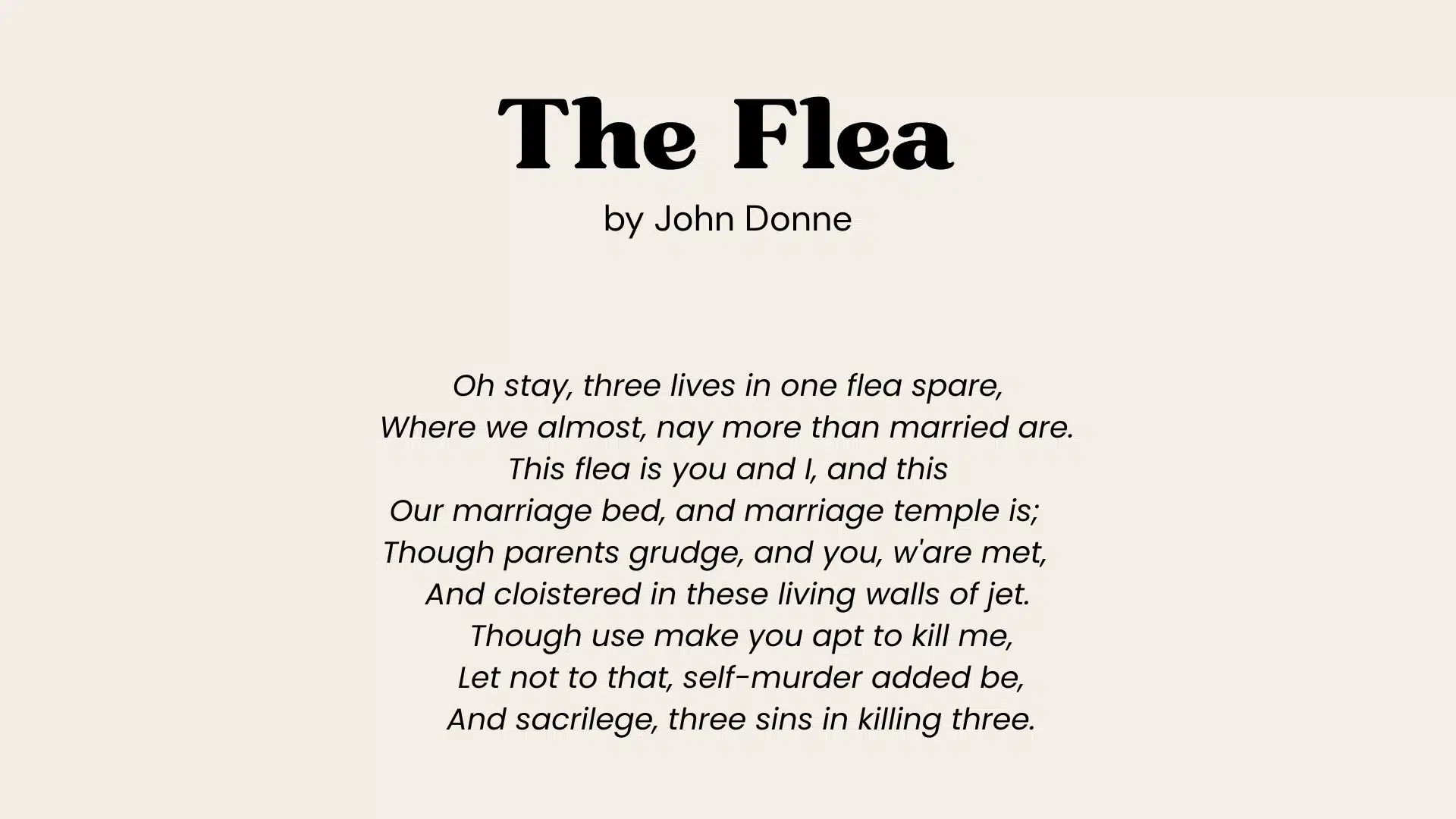
Donne uses a flea that’s bitten both lovers as an argument for sex; their blood is already mixed inside it, so what’s the harm?
It’s cheeky seduction disguised as logic.
Only John Donne could turn a bug bite into foreplay and somehow make it charming rather than gross.
8. Two Bodies by Octavio Paz
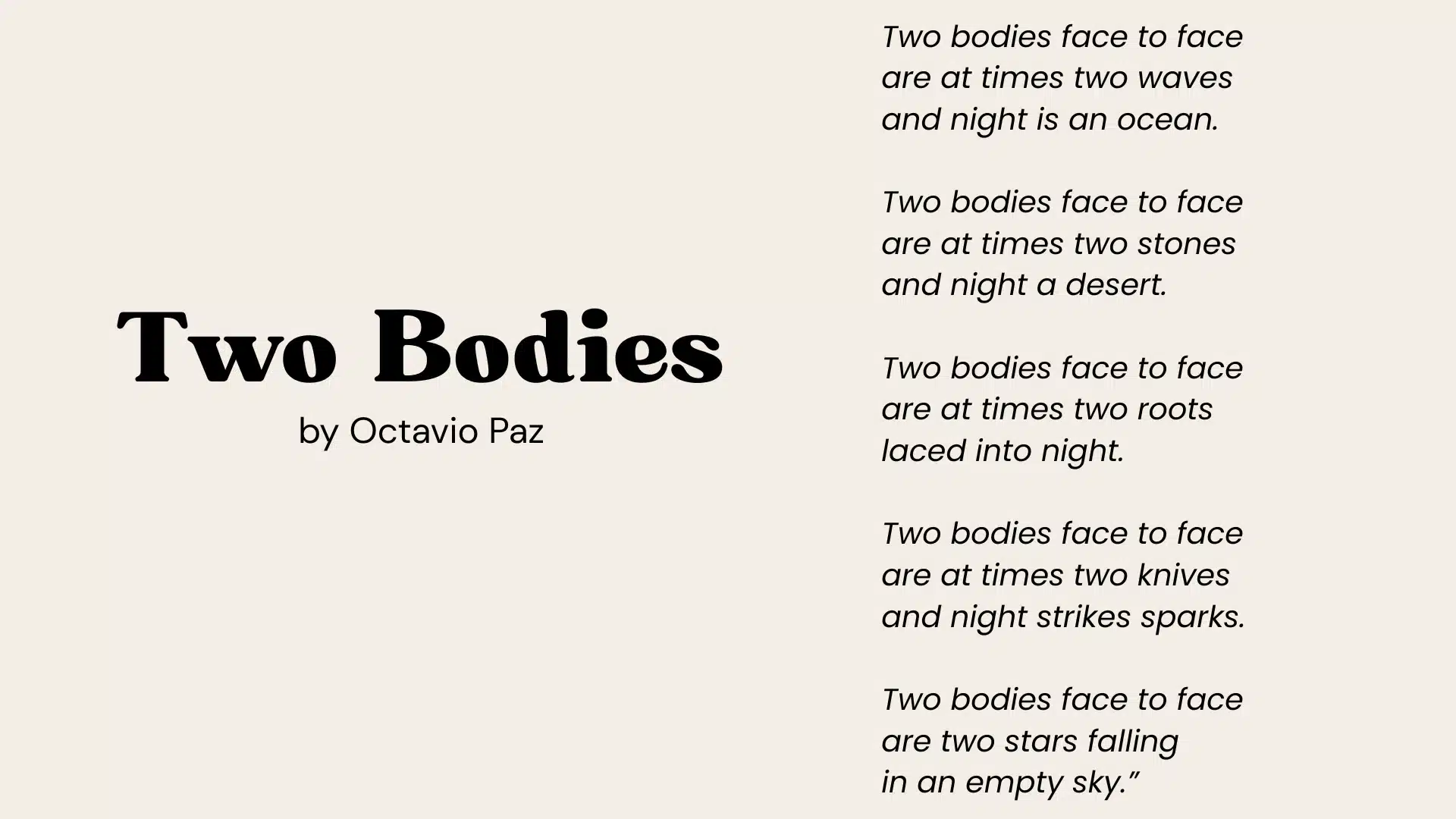
Octavio Paz celebrates the physical form as a landscape and territory to look into.
Bodies become geography, hills, valleys, paths to wander. It’s erotic without being crude, finding poetry in physical connection. The body isn’t just desired.
It’s considered beautiful and worthy of artistic attention.
9. Since Feeling is First by E.E. Cummings
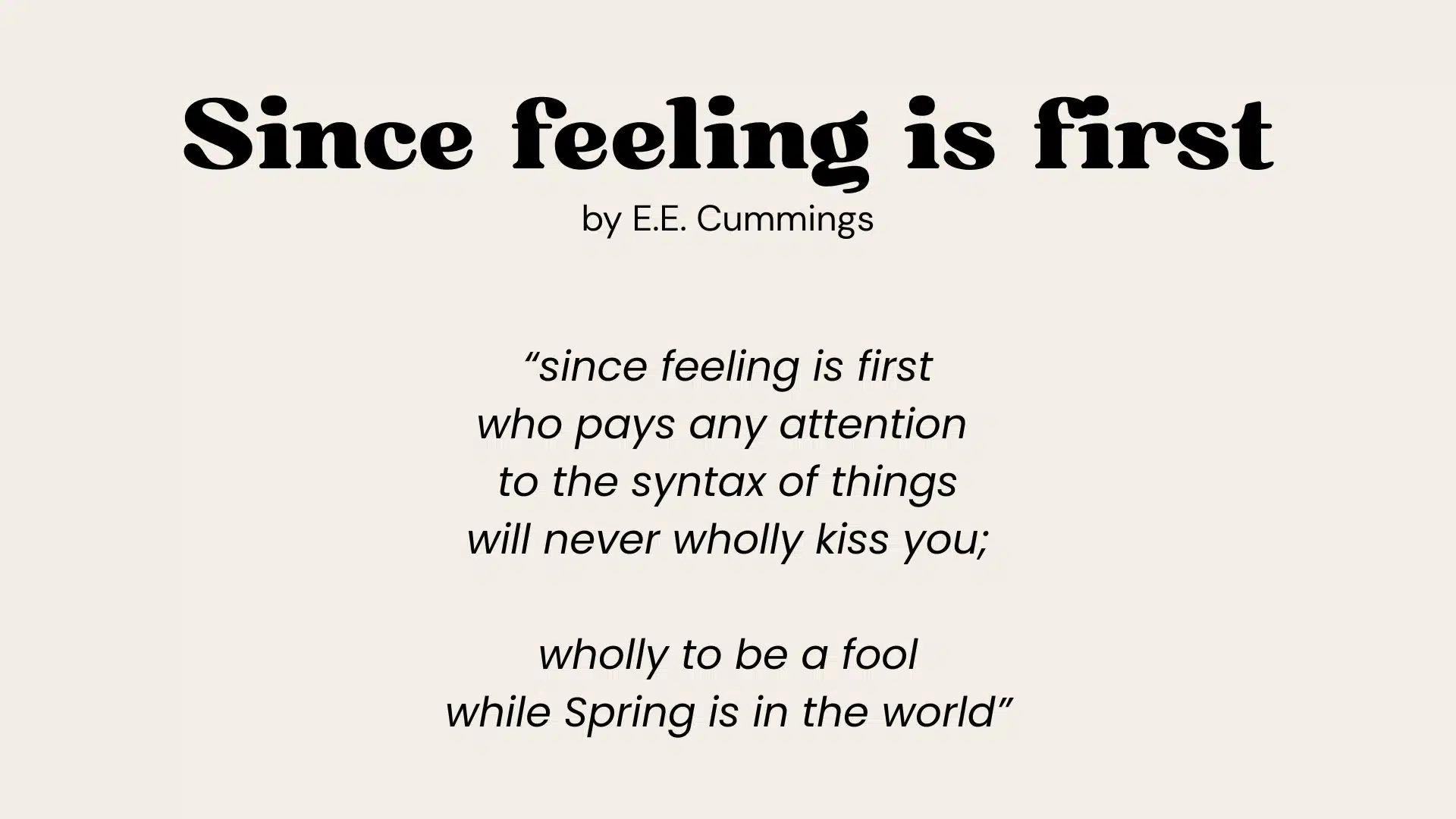
Cummings argues for heart over head.
Stop overthinking, stop analyzing, just feel.
Life’s too short for careful punctuation when you could be kissing instead. Pure Cummings’ rebellion against rules.
10. Kissing by Fleur Adcock
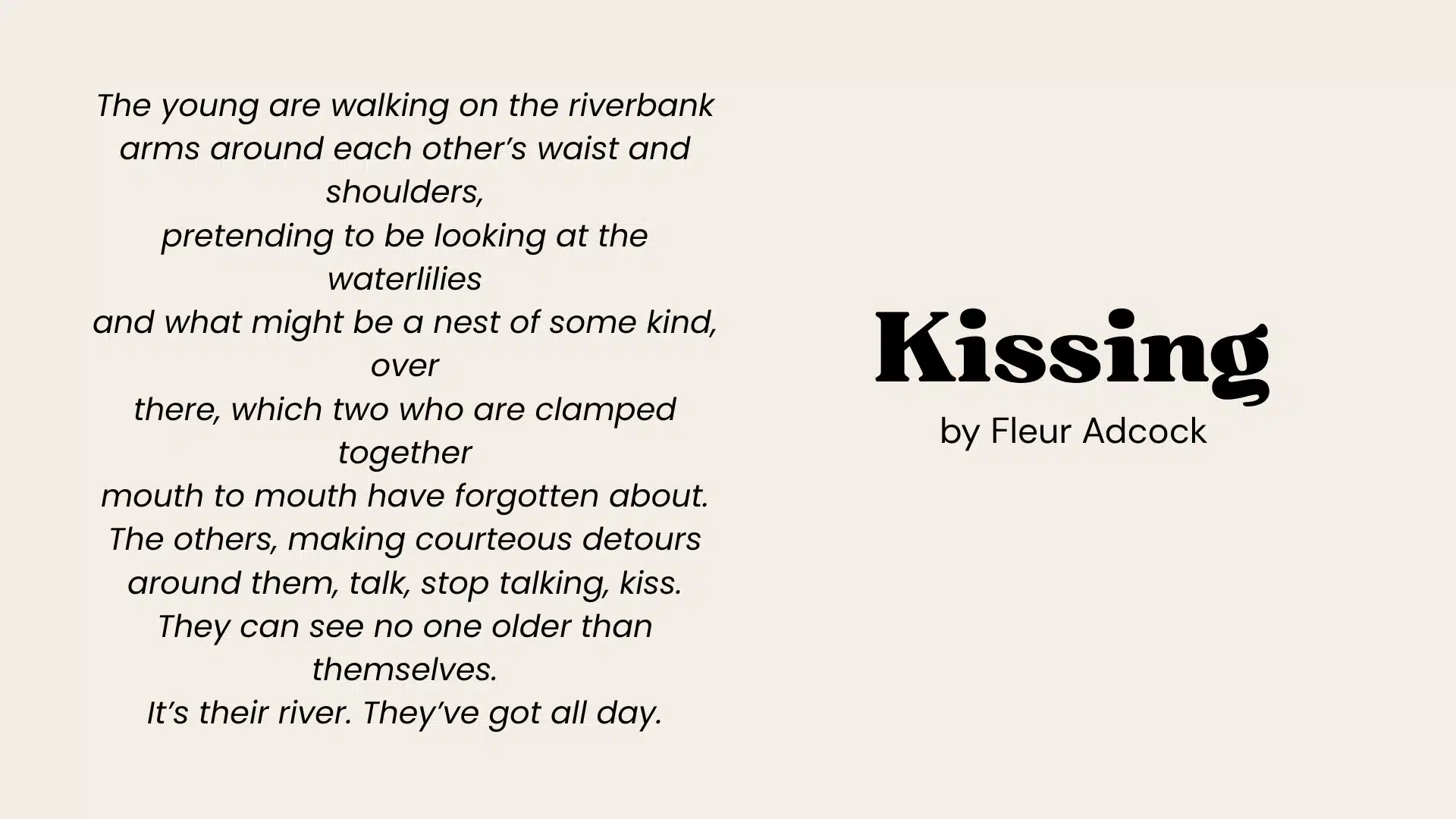
Fleur Adcock matter-of-factly discusses the mechanics and pleasure of kissing.
No flowery metaphors, just a straightforward celebration of physical connection. It’s refreshingly direct, kissing is great, let’s talk about why.
Sometimes love poetry doesn’t need to be complicated to be effective.
11. She Tells Her Love While Half Asleep by Robert Graves
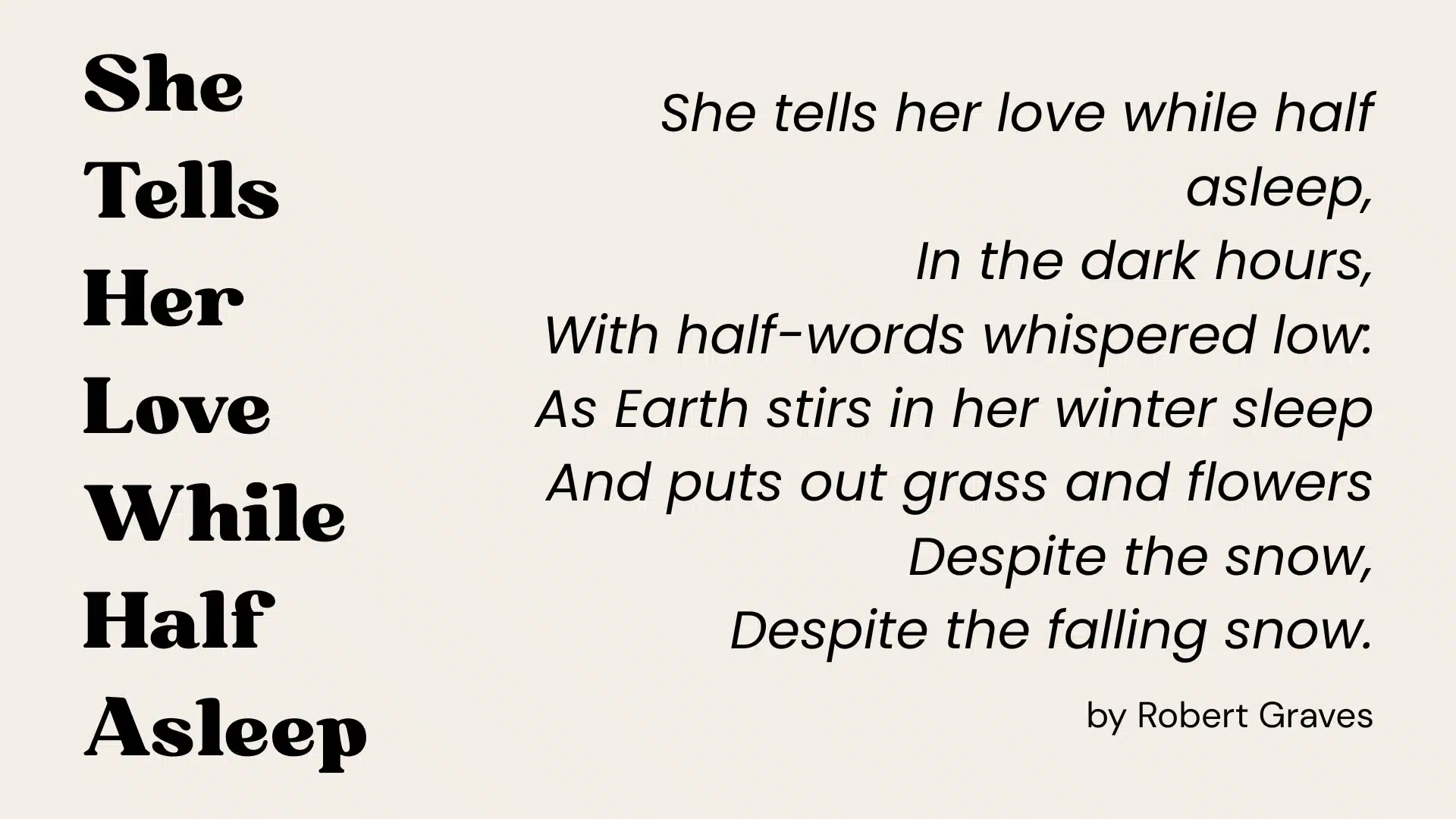
In that drowsy state between sleep and waking, she whispers truths she might not say fully conscious.
Her guard is down, her real feelings slip out.
Robert Graves captures those vulnerable moments when honesty emerges naturally, showing how intimacy lives in unguarded spaces.
Bonus Favourites
These gems are too good to leave out. These show a distinctive perspective on love’s many faces.
12. A Red, Red Rose by Robert Burns
Burns compares his love to a fresh red rose and a sweet melody, then promises to love her until the seas go dry and the rocks melt.
Written in Scottish dialect, it feels faithful and courteous, like a love song from someone who means every word.
13. Love’s Philosophy by Percy Bysshe Shelley
Shelley uses nature to make his case.
Rivers mingle with oceans, winds mix together, and flowers lean on each other. So why shouldn’t we kiss?
Romantic persuasion wrapped in beautiful imagery.
14. Bright Star by John Keats
Keats wishes he could be as constant as the North Star, but not cold and alone.
Instead, he wants to be steadfast while resting on his lover’s chest, feeling her breathe forever. It’s about wanting permanence in love’s tender moments.
Written shortly before his death.
15. Sonnet 14 by Elizabeth Barrett Browning
Browning tells her lover not to love her for superficial reasons, not for her smile or her voice, because those things fade.
Instead, love her for love’s sake alone. It’s a bold request for unconditional love.
16. Sonnet 29 by William Shakespeare
This begins in darkness; the speaker feels like a failure, envying everyone else.
But then he thinks of his love, and suddenly everything changes. One thought of this person makes him feel richer than kings.
It’s about how love can lift you from your lowest moments.
17. Variations on the Word Love by Margaret Atwood
Atwood examines how we throw around the word “love” for everything: pizza, movies, people.
Then she digs into what it really means. Vulnerability, risk, the terrifying act of opening yourself completely to another person.
It’s love poetry for people who think too much.
18. Sonnet 18 by William Shakespeare
Shakespeare compares his beloved to a perfect summer day, then argues they’re even better because their beauty won’t fade.
It’s basically saying “you’re eternal” in the most beautiful way possible.
19. Having a Coke with You by Frank O’Hara
O’Hara makes the ordinary extraordinary.
Sharing a Coke with his lover beats all the art and beauty in the world. It’s casual and conversational, capturing how being with the right person makes simple moments magical.
This is what modern love poetry should sound like.
20. The Orange by Wendy Cope
At lunchtime, someone bought Cope an orange. That’s it, that’s the poem.
But it’s about how small gestures from someone you love carry enormous weight. Twelve simple lines that prove you don’t need flowery language to capture love’s quiet power.
21. When You Are Old by W.B. Yeats
Yeats writes to his beloved, imagining her as an old woman looking back on her life.
He’s the one who loved her soul, not just her beauty.
It’s wistful, a bit sad, and carries the weight of unrequited love that haunted Yeats for years.
22. The Good-Morrow by John Donne
Donne argues that life before love wasn’t really living, just sleeping or childish dreaming.
Now that they’ve found each other, they’ve truly awakened. It’s a passionate philosophy disguised as a morning-after poem, celebrating love as the ultimate awakening.
23. Song of Songs (Excerpts)
Biblical poetry that’s surprisingly sensual.
“Let him kiss me with the kisses of his mouth” isn’t your typical scripture.
These ancient verses celebrate physical desire and romantic longing through bold imagery of gardens, spices, and wine.
24. To Helen by Edgar Allan Poe
Poe idealizes a woman whose beauty brought him home.
She’s become a mythical figure, part muse, part goddess. It’s longing for an almost unattainable perfection, a romantic obsession at its most lyrical.
25. Tonight I Can Write by Pablo Neruda
Neruda writes the saddest lines after losing his love. Heartbreak never sounded more beautiful.
“I loved her, and sometimes she loved me too”, that uncertainty cuts deep.
The night is shattered without her, and he admits through his pain that he might still love her.
26. Sonnet 17 by Pablo Neruda
Neruda describes a love so natural it’s like breathing, unconscious, and important.
He loves in the shadows, secretly, the way plants love light. It’s devotion stripped of performance, love that exists simply because it must.
27. The Sun Rising by John Donne
Donne tells the sun to buzz off because he’s in bed with his lover
Their bedroom contains the whole world, kings, wealth, everything that matters. It’s playful arrogance backed by devotion. Nothing outside this room compares to what they have together.
28. A Birthday by Christina Rossetti
Rossetti’s heart is like a singing bird, an apple tree, a rainbow shell, overflowing with joy because her love has come. She wants the world decorated in gold and silk to match her happiness.
Pure celebration, no complications, just the exuberant “my love has come to me.”
29. Now Sleeps the Crimson Petal by Alfred, Lord Tennyson
Everything in nature rests together, the petals, cypress, fireflies, and so should the lovers.
Tennyson twists sensual imagery into a lullaby of intimacy, creating a cosmic connection. It’s tender eroticism wrapped in Victorian elegance.
30. The Definition of Love by Andrew Marvell
Marvell explores love that’s perfect but impossible; fate itself keeps the lovers apart. Their love is so strong that the stars would have to realign for them to be together.
It’s about devotion that persists despite impossibility, love that remains pure because it can’t be fulfilled.
31. Love After Love by Derek Walcott
Walcott writes about reuniting with yourself after heartbreak.
“You will love again the stranger who was you”, it’s about self-love and rediscovery. It’s a powerful reminder that the most important relationship is with yourself.
32. In Your Light I Learn How to Love by Rumi
Rumi blurs the line between divine and human love. His beloved teaches him everything.
How to love, how to live, how to see. “In your light I learn how to love. In your beauty, how to make poems.”
It’s spiritual devotion that feels intensely personal and romantic.
33. Scaffolding by Seamus Heaney
Heaney compares building a relationship to constructing a building; you need scaffolding at first, temporary support. But once the structure is solid, you can remove it and trust what you’ve built together.
It’s about how love requires work and patience and eventually becomes self-supporting.
34. The More Loving One by W.H. Auden
Auden admits his love isn’t equally returned, and chooses to be the one who loves more.
“If equal affection cannot be, let the more loving one be me.”
It’s a dignified acceptance of asymmetrical love, finding nobility in giving more than you receive.
35. One Art by Elizabeth Bishop
Bishop repeats “the art of losing isn’t hard to master” while listing losses from keys to loves.
The poem’s structure barely contains her grief; that final “Write it!” shows the cracks. It’s about pretending loss is manageable when losing someone you love absolutely isn’t.
36. To His Coy Mistress by Andrew Marvell
This is basically “life’s too short, let’s not waste time” wrapped in gorgeous poetry.
Marvell tells his hesitant lover that if they had all the time in the world, he’d spend centuries adoring her. But they don’t, so they should seize the moment now.
It’s romantic urgency at its finest.
37. To His Mistress Going to Bed by John Donne
Donne describes undressing his lover with barely contained desire. Each layer removed reveals more beauty.
It’s Renaissance erotica, unabashedly celebrating physical intimacy. Frank, sensual, and surprisingly modern in its directness about wanting someone completely.
38. The Passionate Shepherd to His Love by Christopher Marlowe
A shepherd promises his love an idyllic life, flowers, music, and fancy clothes made from nature’s best materials.
It’s pure pastoral romance, painting a picture of simple pleasures and devoted companionship.
39. The Ache of Marriage by Denise Levertov
Levertov examines the complex intimacy of marriage. It’s about longing within commitment, the tension between closeness and distance, even in partnership.
Marriage isn’t just comfort. It carries desire, frustration, and the ache of trying to truly know another person.
40. Touched by an Angel by Maya Angelou
Angelou describes how love changes us, suddenly find it when touched by love.
Physical connection becomes spiritual awakening. It’s sensual in the truest sense. Love engaging all the senses and changing everything about how we move through the world.
41. A Valediction: Forbidding Mourning by John Donne
Donne tells his wife not to make a fuss when he leaves; their love is too fine for tears.
He compares them to compass legs; even when apart, they’re connected, and she keeps him centered. It’s intellectual devotion, arguing that physical separation can’t touch spiritual connection.
42. Porphyria’s Lover by Robert Browning
Dark obsession disguised as a love poem. The speaker strangles Porphyria with her own hair to preserve the perfect moment of loving him.
“And yet God has not said a word!” It’s disturbing, a glimpse into possessive love gone horribly wrong.
Browning is digging into the dangerous boundary of love.
43. My Last Duchess by Robert Browning
A duke shows off a portrait of his late wife while revealing he had her killed for smiling too freely at others. Chilling jealousy masked as cultured conversation.
This isn’t love, it’s control and ownership. Browning exposes how “love” can become a toxic possession in the wrong hands.
44. Somewhere I Have Never Travelled by E.E. Cummings
Cummings describes how his lover opens and closes him with a touch, reaching places in his soul nobody else can.
It’s vulnerability, the terrifying beauty of letting someone see your deepest self completely.
45. Sonnet 43 by Elizabeth Barrett Browning
Browning literally lists all the ways she loves her husband, from the everyday to the spiritual.
It’s intimate, earnest, and so honest it still makes people tear up at weddings. This is what devotion really looks like on paper.
46. A Dedication to My Wife by T.S. Eliot
Eliot gets surprisingly sweet here, thanking his wife for giving him peace and joy.
It’s gratitude wrapped in gentle affection. Not his usual heavy intellectualism, just honest appreciation for the woman who made his life better.
47. Sonnet 116 by William Shakespeare
Shakespeare’s definition of true love doesn’t change, it doesn’t fade, and it weathers every storm. His way of saying real love is constant.
This one gets read at weddings; it’s about commitment that lasts and stays the same.
48. Atlas by U.A. Fanthorpe
Fanthorpe’s lover isn’t a Greek god holding up the sky. They’re the person who fixes practical problems, remembers appointments, and makes life work.
It’s honoring the everyday heroism that sustains relationships.
49. Valentine by Carol Ann Duffy
“Not a red rose or a satin heart.”
Duffy gives her lover an onion instead. It’s honest, fierce, and a little sharp, just like real love. The onion makes you cry, clings to your fingers, and reflects light.
It’s anti-romantic romance, love without the greeting card nonsense.
50. The Lanyard by Billy Collins
Collins remembers making his mom a lanyard at camp, thinking it repaid her for giving him life.
The humor and tenderness mix perfectly; we can never repay those who love us unconditionally. It’s about gratitude, the inadequacy of our gestures, and love that doesn’t keep score.
51. The Clod and the Pebble by William Blake
Blake presents two opposing views of love. A soft clod of clay says love is selfless, living for another’s pleasure. A hard pebble argues love is selfish, seeking its own joy.
Both exist in the same world. Which one’s right?
Maybe both.
52. Annabel Lee by Edgar Allan Poe
Poe’s haunting tale of a love so strong that even death can’t end it.
He and Annabel Lee loved each other as children by the sea, and when she died, he still feels their connection. It’s tragic, beautiful, and a bit eerie.
It’s Poe’s way of saying true love transcends mortality.
53. The Confirmation by Edwin Muir
Muir describes love as a quiet certainty, not fireworks, but deep recognition.
Simple moments that confirm you’ve found your person. It’s love as peaceful knowing rather than dramatic passion.
54. Love and a Question by Robert Frost
A bridegroom on his wedding night faces a stranger seeking shelter.
Does he share his zeal or protect this sacred moment? Sometimes love means making impossible choices about where to direct our care.
55. I Sing of Olaf Glad and Big by E.E. Cummings
Wait, this is actually about a conscientious objector, not romantic love.
But Cummings’ fierce loyalty to Olaf’s courage and his rage at injustice show another kind of love. Standing by your principles and the people who matter, no matter the cost.
Famous Poets Who Wrote the Most Beautiful Love Poems
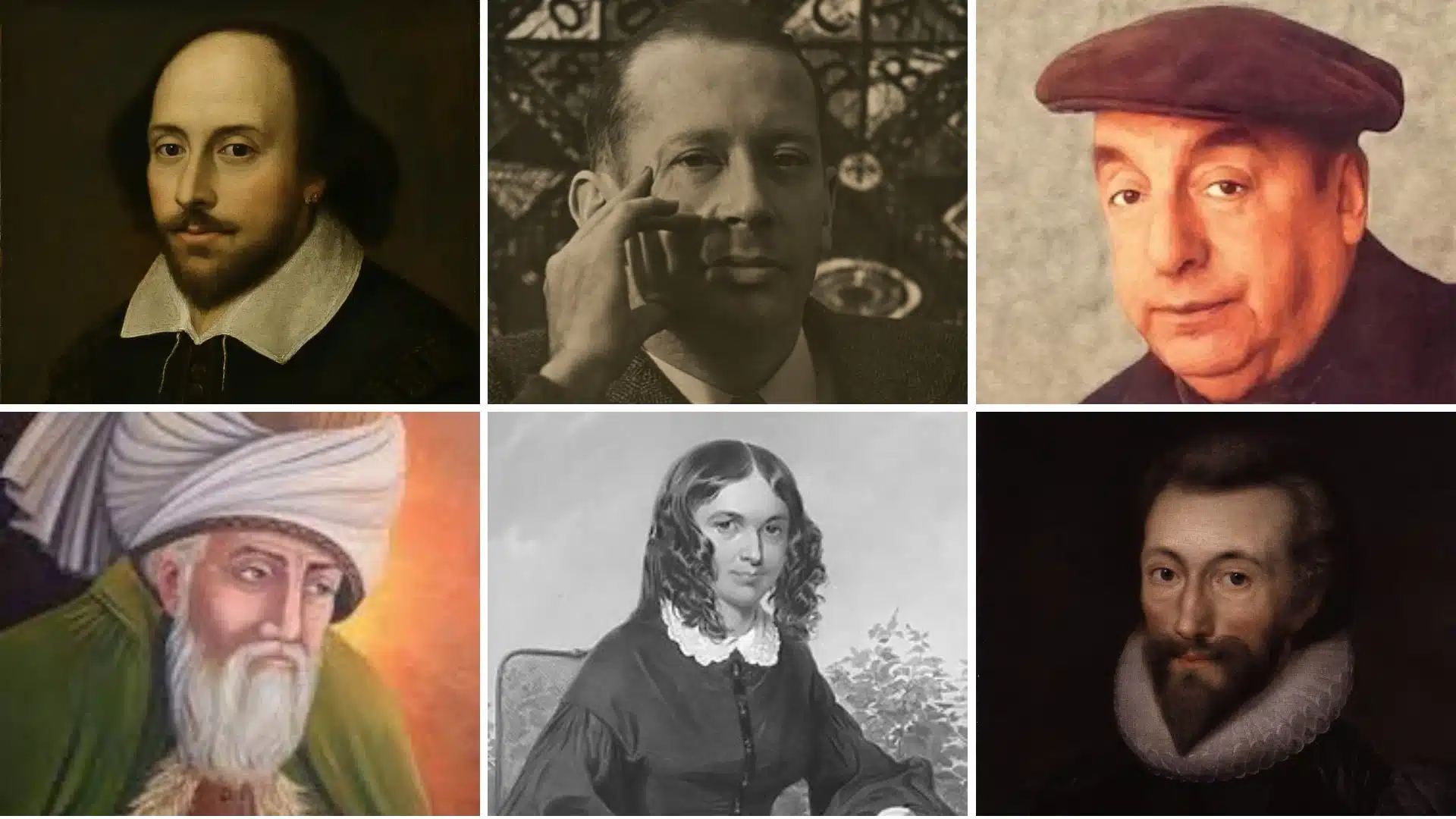
Some poets taught us how to love and to be loved.
- William Shakespeare: 154 sonnets, most about love. Changed how we talk about romance forever.
- Pablo Neruda: Chilean poet obsessed with passion. “Twenty Love Poems and a Song of Despair” became a worldwide bestseller.
- E.E. Cummings: Broke grammar rules to capture love’s chaos. Made romance feel modern and messy.
- Rumi: 13th-century Persian mystic. Wrote thousands of verses blending spiritual and romantic love.
- Elizabeth Barrett Browning: “Sonnets from the Portuguese ”gave us “How do I love thee?” Victorian romance at its finest.
- John Donne: Witty, sensual, metaphysical poems. Never shy about physical desire.
These poets didn’t just write about love; they shaped how we understand it.
Is Reading Love Poems Still a Thing Today?
Yes. Poems about love haven’t gone anywhere.
People share verses on social media, text them to crushes, and read them at weddings. The medium changed, but the need for beautiful words about love? That’s eternal.
Bookmark your favorites from this list.
Share one with someone special. Read them when you need to feel something deeply.
Or just keep them close for those moments when you want to remember why love is still worth writing about.
Which poem resonated with you the most?
Frequently Asked Questions (FAQs)
1. What is the Most Beautiful Love Poem Ever Written?
Many consider Shakespeare’s “Sonnet 116” or Elizabeth Barrett Browning’s “How Do I Love Thee?” as the most beautiful love poems ever written. Both celebrate unchanging love.
2. How do I Say “I Love You” in Poetry?
Express “I love you” in poetry by using explicit imagery, personal emotions, and creative comparisons. Describe how the person makes you feel.
3. Poems About Love for Him
“How Do I Love Thee?” by Elizabeth Barrett Browning is perfect for him. This classic poem counts the ways she loves, expressing deep devotion.
4. Poems About Love for Her
“She Walks in Beauty” by Lord Byron is ideal for her. The poem compares her beauty to a starry night.
