







Something feels off, but you cannot explain it. You feel guilty for things that are not your fault.
You second-guess yourself more than you used to.
That is what manipulation in relationships looks like from the inside. It does not always show up loud or obvious.
Sometimes it is quiet, slow, and hard to name. But once you see it, everything starts to make sense.
Keep reading and let us work through it together.
What Manipulation in Relationships Really Looks Like
Most people expect manipulation to be obvious. They picture loud arguments or aggressive behavior.
But that is rarely how it works.
Manipulation in relationships often hides in everyday moments. It shows up in small comments, repeated patterns, and quiet shifts in how you feel around someone.
It does not always feel like control. Sometimes it feels like concern. Sometimes it feels like love.
There is a clear difference between influence and control. Healthy influence respects your choices.
Control tries to change them. When someone regularly pushes you to think, feel, or act a certain way for their own benefit, that is when a line gets crossed.
Here is what it can look like day to day:
- A partner who questions your decisions until you start doubting yourself
- Someone who uses your feelings against you during arguments
- A person who shifts the story every time you try to address something
It is rarely one big moment. It builds through small ones.
7 Signs of Manipulation in a Relationship
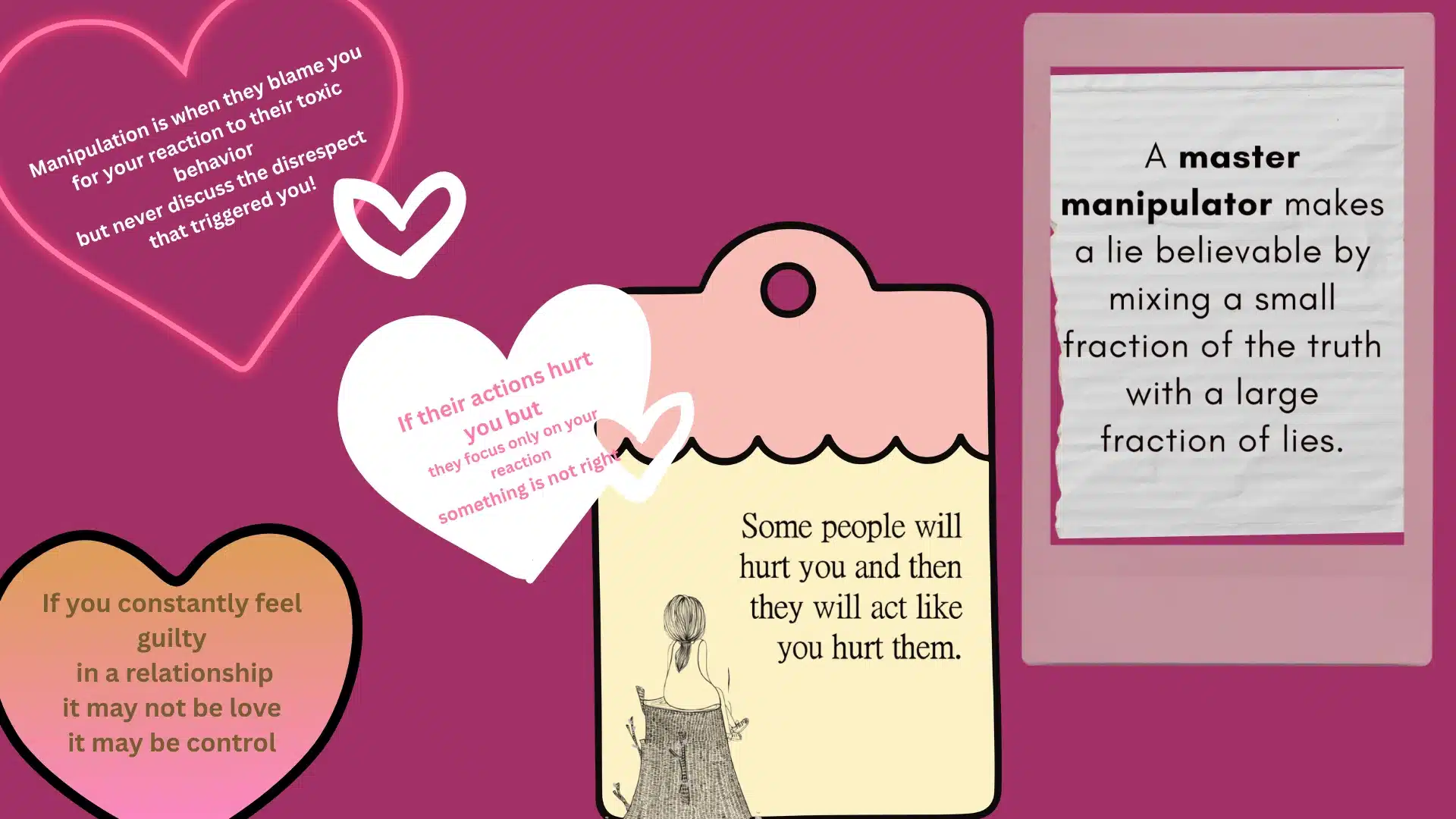
Knowing what to look for makes a real difference. Here are the most common signs to watch for.
1. You Feel Guilty More Than You Should
Guilt is a healthy emotion when you have genuinely done something wrong.
But if you feel guilty constantly, even for small things or things that are not your fault, something is off.
Manipulative partners often create guilt where none should exist. They frame situations so you feel responsible for their moods, reactions, and choices.
2. You Start Questioning Your Own Thoughts
Do you find yourself second-guessing things you were once sure about? Do you replay conversations, trying to figure out where you went wrong?
This kind of self-doubt often grows when someone repeatedly challenges your version of events or makes you feel like your memory cannot be trusted.
3. Conversations Leave You Confused
A healthy disagreement may be uncomfortable, but it usually ends with some clarity. If conversations regularly leave you more confused than before, that pattern is worth noting.
You might finish a discussion unsure of what actually happened, who said what, or why you even brought the issue up.
4. You Feel Pressured to Keep Them Happy
There is a difference between wanting your partner to be happy and feeling responsible for managing their emotions at all times.
If you constantly change your plans, words, or opinions to avoid upsetting them, you are no longer making free choices.
You are responding to pressure.
5. Silence is Used to Make You Give in
The silent treatment is one of the clearest examples of manipulation. When someone goes quiet not to process their feelings but to punish you or force a reaction, it becomes a tool of control.
If the silence only ends when you apologize or back down, the pattern is clear.
6. Affection Comes and Goes Based on Your Behavior
Love should not feel like something you have to earn repeatedly.
If warmth and affection are withdrawn whenever you do not meet certain expectations, that is conditional behavior.
It keeps you working to get back to a good place rather than simply being in one.
7. You Feel Less Like Yourself Over Time
This is one of the most telling signs. People who experience manipulation in relationships often describe a slow loss of confidence.
They stop doing things they used to enjoy.
They pull back from people they trust. They become quieter versions of who they were.
If that shift sounds familiar, it deserves honest attention.
Common Manipulation Behaviors in Dating and Relationships

These behaviors may not always look dramatic. But they add up over time.
Guilt-Tripping
This is when someone uses your care for them as leverage.
Phrases like “after everything I have done for you” or “I guess I just do not matter” are designed to make you feel bad enough to give in.
Gaslighting During Arguments
Gaslighting means making you question your own reality. A partner might deny saying something you clearly remember.
They might tell you that you are overreacting or being too sensitive. Over time, you stop trusting your own account of things.
Research from the National Domestic Violence Hotline identifies gaslighting as a common form of emotional abuse because it gradually breaks down a person’s trust in their own mind.
Playing the Victim to Avoid Accountability
When a conversation turns to something they did wrong, the focus somehow shifts to how much they are suffering.
You end up checking on them instead of addressing the original issue. Nothing gets resolved.
Love Bombing Followed by Pulling Away
Love bombing means overwhelming someone with attention and affection early on. It feels wonderful at first.
But when that intensity suddenly drops or becomes conditional, it leaves you confused and trying to get back to how things felt before.
Subtle Control Over Your Choices
This does not always look like direct orders.
It can be ongoing criticism of your friends, negative comments about how you dress, or always having a reason why your plans are not a good idea.
Over time, your choices start to reflect their preferences more than your own.
Making You Feel Responsible for Their Reactions
“Look what you made me do.” “If you had not done that, I would not have reacted that way.” These phrases shift responsibility onto you for someone else’s behavior.
Healthy partners own their reactions.
Breadcrumbing VS Love Bombing VS Manipulation
Some dating behaviors are hard to tell apart. Here is a quick breakdown before comparing them side by side.
Breadcrumbing: Is when someone gives you just enough attention to keep you interested but never fully commits. A text here. A like there. Enough to keep you hoping but nothing solid.
Love bombing; Is the opposite in style but just as confusing. It is a flood of affection, compliments, and attention all at once. It feels wonderful until it suddenly stops or becomes conditional.
This is how all three compare:
| Behavior | What It Looks Like | How It Makes You Feel |
|---|---|---|
| Breadcrumbing | Inconsistent contact, mixed signals, no real commitment | Confused, anxious, always waiting |
| Love Bombing | Overwhelming affection early on, followed by withdrawal | Euphoric at first, then lost and unsettled |
| Manipulation | Repeated patterns that control your choices or emotions | Guilty, doubtful, emotionally drained |
All three can overlap. Someone can breadcrumb you while also using manipulation to keep you from walking away.
5 Examples of Emotional Manipulation in Relationships
Sometimes seeing real situations makes it easier to recognize. Here are some common examples of manipulation that people experience.
“If You Really Cared, You Would…”
This phrase turns a simple request into an emotional test. It implies that saying no means you do not care. It pressures you by making your love feel conditional on doing what they want.
A caring partner makes requests. They do not frame every ask as a test of how much you value them.
Rewriting What Happened in Arguments
You bring up something that hurt you. They tell you it did not happen the way you remember. Or they say you are taking it out of context.
By the end of the conversation, you are no longer talking about what bothered you. You are defending your version of events.
This protects them from accountability by making you doubt yourself instead.
Using Silence to Control the Situation
They stop responding. They give one-word answers. They leave the room. And it continues until you come back with an apology or drop the subject entirely.
This is not someone who needs space. This is silence used as a way to get a specific result.
Bringing Up Your Past to Win Fights
Old mistakes get pulled into current arguments.
Things you already addressed or apologized for come back up when they need to shift focus or gain the upper hand.
It keeps you on the defensive and stops any real resolution from taking place.
Acting Hurt to Avoid Taking Responsibility
You raise a concern, and suddenly, they are the ones who are deeply hurt. The original issue disappears.
You find yourself apologizing and checking on them.
Their feelings become the center of a conversation that was never about them.
Responding to Emotional Manipulation
Knowing what is happening is one thing. Knowing how to respond is another. Pausing before you react is one of the most useful things you can do.
Name It Quietly to Yourself First: Recognizing “this is manipulation” gives you back a sense of control without saying a word.
- Do Not Over-Explain Yourself: Manipulative behavior often thrives on getting you to justify your choices over and over. A calm and simple “I disagree” or “I see it differently” is enough.
Set a Clear Limit: Say what you will and will not accept. Say it once and mean it.
- Give Yourself Time Before Responding: Stepping away for a few hours stops you from reacting purely out of emotion. It gives you space to think about what you actually want to sa
Talk to Someone you Trust: A good friend or counselor can help you see the situation from the outside.
Is Emotional Abuse the Same as Emotional Manipulation?
Not exactly, but they are closely connected.
Emotional manipulation is often a pattern of behavior used to control how you think or feel.
Emotional abuse goes further. It is more consistent, more intense, and causes deeper harm over time.
Think of it this way. All emotional abuse involves manipulation, but not all manipulation rises to the level of abuse.
If it is showing up regularly and changing how you feel about yourself, do not brush it off. That is a sign it needs your attention.
Effects of Manipulation in a Relationship
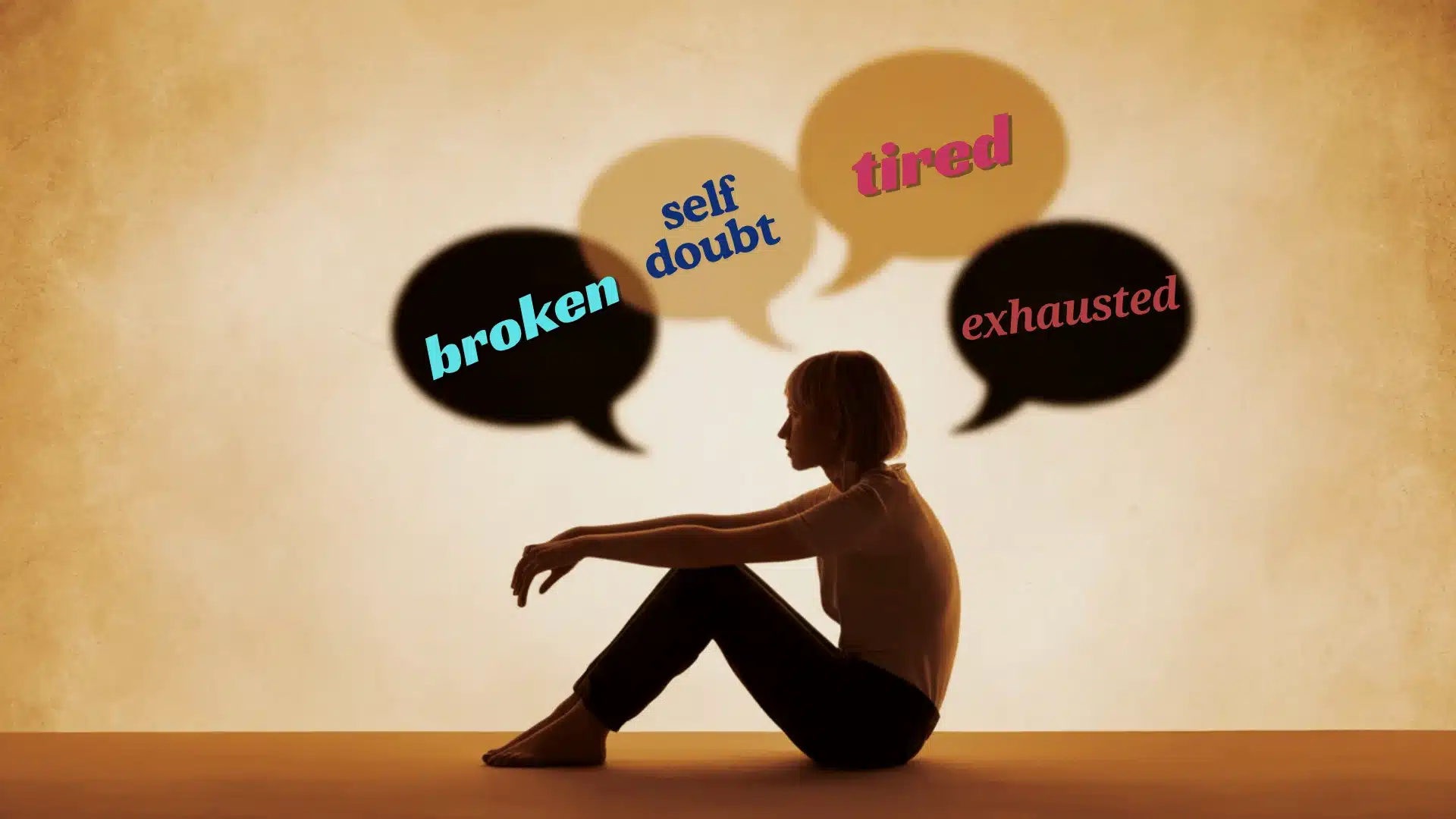
The effects of manipulation do not stay contained to difficult moments.
They spread into how you think, feel, and function every day.
You Start Overthinking Everything
Simple decisions start to feel heavy. You replay conversations.
You think twice before saying something honest. Mental energy that could go anywhere else gets used up managing one relationship.
Your Confidence Takes a Hit
Repeated self-doubt and emotional confusion wear down your sense of self. Many people in manipulative relationships describe feeling less capable or less worthwhile than they did before.
You Feel Emotionally Drained
There is a specific kind of tiredness that comes from constantly reading the room. It is not physical.
It is the exhaustion of always being on alert and preparing for the next difficult moment.
You Struggle to Trust Your Own Decisions
When your judgment gets questioned enough times, you stop relying on it.
You might seek reassurance on things you once handled easily. This is a direct result of having your reality consistently challenged.
You Feel Dependent on Their Approval
Over time, their opinion of you starts to carry more weight than your own.
You make choices based on what they will think rather than what feels right to you.
That shift is one of the quieter but more damaging effects of manipulation in a relationship.
You Pull Away From Friends or Support
Isolation often happens without much notice. You turn down invitations. You stop sharing things with people you trust.
The relationship starts to take up most of your emotional space and outside connections begin to fade.
How Manipulation Makes You Feel and Why That Matters
The way a relationship makes you feel over time is important information. Here is what people often describe:
- Confusion after conversations that should have been simple
- A steady sense that you are always in the wrong
- The feeling of constantly watching what you say around someone you love
- Always needing to explain or justify your thoughts and feelings
These are not small things. When feelings like these show up consistently, they are worth taking seriously.
Your emotional experience inside a relationship is valid. It is not a sign of weakness. It is not overthinking. It is honest feedback about what is happening to you.
How to Talk to Your Partner About Manipulation
Bringing this up is not easy. But staying silent does not help either.
Choose a calm moment, not the middle of an argument. Be specific about how certain behaviors make you feel.
Use “I feel” statements rather than placing blame.
For example, say “I feel confused when conversations end this way” instead of “you always do this.”
Stay focused on the behavior, not the person.
If they listen and take it seriously, that is a good sign. If they dismiss or turn it around on you, that tells you something important too.
Manipulation vs Normal Relationship Conflict
Not every argument is manipulation. Healthy relationships have conflict, too. Here is how to tell them apart.
| Healthy Conflict | Manipulation |
|---|---|
| Both people feel heard | One person feels shut down or confused |
| Disagreements end with some clarity | Conversations leave you more unsure |
| Respect stays in place | You feel pressured or belittled |
| Both people take accountability | Blame consistently lands on one person |
| Space is given without punishment | Silence is used as a tool of control |
Normal conflict can be uncomfortable, even heated. But it does not leave you doubting yourself or working to earn your way back into someone’s good graces.
Love Should Not Feel Like Control
Manipulation in relationships is not always easy to see, especially when feelings are involved. But your emotional experience matters.
If you often feel confused, guilty, or unsure of yourself, those feelings are telling you something. Take them seriously.
You deserve a relationship that feels steady and clear, not one that leaves you questioning yourself.
Start by trusting what you feel.
That small shift can change how you see everything moving forward. Share your thoughts in the comments below.
Frequently Asked Questions (FAQ’s)
1. What Are Common Signs of Manipulation in a Relationship?
Guilt, self-doubt, confusion after conversations, and pressure to manage someone else’s emotions.
2. What Are Some Examples of Emotional Manipulation?
Guilt-tripping, gaslighting, silent treatment, love bombing, and shifting blame onto you.
3. What Are the Effects of Manipulation in a Relationship?
Low confidence, emotional exhaustion, poor self-trust, and pulling away from friends and support.
4. How do I Know if I am Being Manipulated?
If you feel confused, guilty, or responsible for someone else’s feelings most of the time.
