
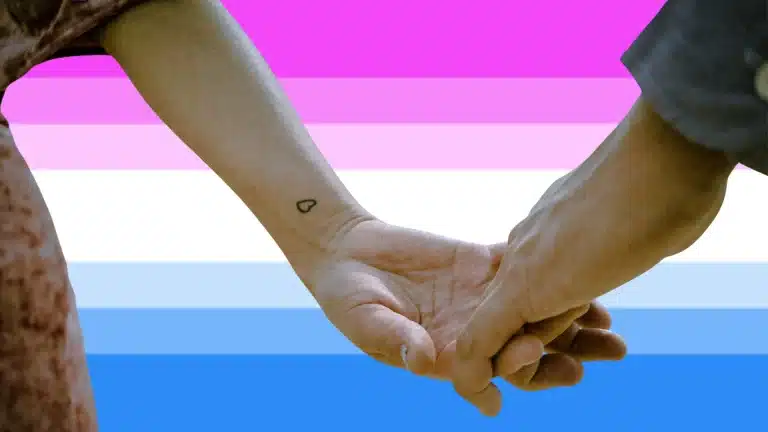






People assume attraction is simple, you either like one gender or you don’t.
But human sexuality works in that way rarely.
Have you ever found yourself drawn to someone outside your usual “type” and wondered what that means?
That’s how bi-curious comes in. This has been going around for years, but a lot of people still aren’t sure what it actually means or mistake it with being bisexual.
Let’s look into it and understand what it actually means, and find out whether you’re bi-curious or just curious.
What Does Bi-Curious Mean?
The bi-curious refers to someone who identifies as mostly straight or gay but feels some level of curiosity or openness toward people of a different gender than they usually date or engage with.
It doesn’t mean they’ve acted on it, it’s more about the inner experience, like thinking “what if.”
People spend years brushing off those feelings, assuming it wasn’t “enough” to consider. But curiosity is valid.
You don’t need a checklist to acknowledge what you feel. It’s okay.
Bi-curiosity is not a phase, and it’s not confusion either. Take your time, and don’t rush to conclusions.
And How is Bisexuality Different from That?
Bisexuality is a well-known and well-defined sexual orientation.
A bisexual person experiences attraction to more than one gender, and that attraction is consistent, not just occasional. It’s part of how they identify.
And they’re still figuring it out.
Bi-curiosity, on the other hand, is more open-ended.
A bi-curious person may not be ready to claim any label. They might be questioning or simply acknowledging that their attraction isn’t as fixed.
That said, the two aren’t opposites. Some people move from bi-curious to bisexual over time. What matters is that both are real, both are valid, and neither one needs outside approval to exist.
Bicurious vs Bisexuality: Quick Overview
Alfred Kinsey suggests that human attraction exists on a spectrum rather than a binary.
Kinsey mapped this out back in the 1940s, and it’s still valid decades later. It’s fascinating that two people can be on the same spectrum and still have completely different experiences.
That’s where bi-curiosity and bisexuality are, close to each other but not the same.
| Bi-Curious | Bisexual | |
|---|---|---|
| Definition | Openness or curiosity toward more than one gender | A defined sexual orientation involving attraction to more than one gender |
| Identity | May not identify with any label yet | Identifies as bisexual |
| Stage | Often exploratory or questioning | Settled sense of orientation |
| Attraction | Occasional or uncertain | Consistent and acknowledged |
| Action required? | No | No |
| Can it change? | Yes, it may evolve over time | Yes, orientation can shift |
| Overlap with bisexuality? | Often a stepping stone | Can include a bi-curious phase |
How to Know if You’re Bicurious?
There’s no test for this. But there are patterns most bi-curious people recognise in themselves.
You might feel drawn to someone outside the gender you usually consider, but in a way that stays. You wonder what a connection with them would look like.
Or the strictly straight or strictly gay label has never quite fit, even without a clear reason why.
Some kept dismissing it.
Others noticed it in what they searched for, or who stayed on their mind.
A few questions you need to ask yourself, or at least try asking:
- Do you feel drawn to people outside the gender you usually date?
- Have you imagined a romantic or physical connection with someone of a different gender, more than once?
- Does a fixed label feel slightly off, even if you can’t explain it?
- Do you feel curious rather than certain, and is that okay with you?
If some of these land, then pay attention to it, not mandatory, but you can.
How to Date When You’re Bi-Curious?
And if you’re dating, being bi-curious can feel very complex. Do you tell the person you’re seeing? Do you need to have everything figured out first?
No, you don’t need a fully formed identity to start dating or finding a connection.
1. Be Honest with Yourself First
Get clear on what you’re looking for. Romantic connection, physical, or both?
You don’t need a definitive answer, but a rough sense of what you want makes it easier to communicate with someone else.
2. Disclosure is Your Call
You’re not obligated to lead with your bi-curiosity on your first date.
Connect first, and share when it feels right. People appreciate honesty, not a perfect confession.
3. Seek out Welcoming Spaces
Apps like HER, Feeld, and OkCupid offer more identity options and attract people who won’t make your curiosity feel like a problem to solve.
4. Don’t Date Just to Confirm Something
The other person is a real human with real feelings.
If you’re engaging with someone, make sure your intentions are pure and your interest genuine, not just a need for answers.
5. Give Yourself Time
A date might leave you certain, confused, or somewhere in between.
Dating while bi-curious isn’t about proving anything to yourself or anyone else. It’s about showing up for yourself and for whoever you’re spending time with.
Can Bi-Curiosity Change Over Time
Yes, and that’s completely normal.
Some people find their bi-curiosity and find it deepens into a clear bisexual identity. Others sit with it for years and feel no need to move it anywhere.
A few people find that the curiosity fades, and that’s valid too.
Sexuality isn’t fixed. It shifts with experience, age, relationships, and self-awareness. Bi-curiosity doesn’t have an expiration date. It doesn’t need to become something.
Conclusion
Look, sexuality doesn’t come with an instruction manual.
Bi-curiosity is just one of many ways people experience attraction, and it’s more common than you know. And if you’re here reading this, it already says something.
Whether you walk away bi-curious with a new label, no labels, or just a little more clarity, it’s a win-win.
Stay curious. Be kind to yourself about it.
Frequently Asked Questions (FAQs)
1. How to Tell if Your Wife is Bi-Curious?
You can’t, and it’s not yours to figure out. If she wants to share it, she will. Open, honest conversations matter more than looking for signs.
2. What is Bambisexual?
Bambisexual describes someone who experiences attraction but feels inexperienced or naive about it, often used by people who are new to finding their sexuality.
3. What are the 15 Sexualities?
Straight, gay, lesbian, bisexual, pansexual, asexual, demisexual, graysexual, omnisexual, polysexual, queer, bicurious, sapiosexual, lithsexual, and aromantic.
4. What is Lithsexual?
Lithsexual refers to someone who experiences sexual attraction but has no interest in it being reciprocated.
