
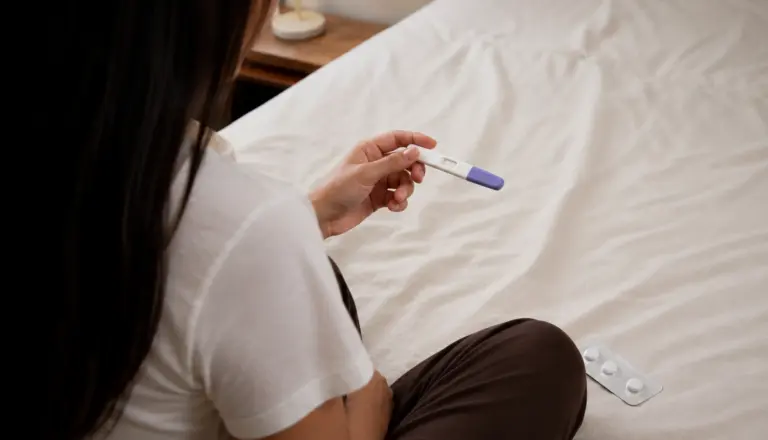






Plan B is a morning-after pill, taken after unprotected sex to help prevent a pregnancy.
Lots of people grab it fast, swallow it, and hope for the best.
But timing matters way more than most people expect. The pill works by preventing the egg from being released, so the cycle stage really counts.
So does Plan B work during ovulation?
The answer catches plenty of people off guard, and it deserves a clear look.
This manual covers how the pill acts, when it falls short, and what better options exist. Keep reading to find out.
How Do You Know When You’re Ovulating?
When you’re ovulating, your body looks noticeably different.
The mucus in the cervical cavity becomes elastic and transparent, resembling egg whites.
Eggs can move more readily because of this change. Additionally, your body temperature slightly rises by less than a degree.
Some ladies get a slight firmness on one side of their abdomen.
Around this time, your desire for sex might rise as well. Breasts may feel a little sensitive.
You can identify your individual pattern of behavior and forecast your fertile days by observing these signs over several months.
And if your breasts feel a little sensitive or you’ve got itchy nipples, how do you know if it’s pregnancy?
Does a Plan B Work During Ovulation?

It postpones the ovary’s discharge of the egg. Therefore, the window has closed if ovulation has already begun.
The pill can’t draw the egg back after it’s out, where sperm can get in.
This explains why the time issue is so important. Many people believe that the morning-after pill always prevents conception.
It doesn’t. Its power is limited to preventing or delaying ovulation.
However, that protection quickly decreases once ovulation begins. Once a process has started, it cannot be stopped by the hormone.
Timing is important because of this, since a minor window can have a major effect.
You still have the best chance if you take it immediately, even if you’re not sure where you are in your cycle.
Is Plan B Safe? How Many Times Can I Use the Morning-After Pill?
Plan B is safe for most people, even when used more than once. It does not harm future fertility or cause lasting damage.
Safe to Repeat: There is no strict cap on how often it can be taken. Someone can use it more than once in a single month if needed.
Not for Regular Use: The pill suits emergencies, not everyday cover. Regular birth control works better and costs far less over time.
Possible Side Effects: Some people experience nausea, fatigue, or sore breasts for a day or two. These pass quickly and cause no real concern.
Cycle Changes: Frequent use can throw off period timing. A period may arrive early, late, or heavier than usual.
A Sign to Switch: Reaching for it often points to a gap in protection. A doctor can suggest a steady method that fits better.
So Plan B is a safe backup, not a daily plan. Anyone leaning on it a lot should chat with a doctor about other options.
What are the Options if You have Already Ovulated?
So the egg has already dropped, and Plan B looks shaky. What now? There is still a backup.
Copper IUD (Paragard)
This is the strongest option after ovulation, by a wide margin. It does not rely on stopping the egg at all.
Instead, it shifts the environment inside the uterus so sperm struggle to survive. The copper releases ions that slow sperm down and block fertilization.
A doctor can place it within five days of unprotected sex. As a bonus, it then works as regular birth control for years.
Ella (Ulipristal Acetate)
This pill holds up better than Plan B close to ovulation. It can push back the egg a little longer, even as the body ramps up. That extra stretch gives it an edge in the final days before release.
Still, it also leans on delaying ovulation. So once the egg is clearly out, its power fades like Plan B. A prescription is usually needed, so a quick call helps.
A Quick Clinic Visit
Speaking with a doctor or nurse sorts out access fast. They can weigh the exact timing against the cycle stage. From there, they suggest the fit with the best odds.
Many clinics offer same-day help, and some give advice by phone. No one has to figure this out alone.
A Pregnancy Test
Timing aside, a test brings clarity in the end. If a period runs more than a week late, a test makes sense. It offers peace of mind either way, calm or quick action.
Home tests work well from the first missed day. A clinic can confirm the result if any doubt lingers.
What Makes Plan B Less Effective During Ovulation?
Plan B’s effectiveness during ovulation is already low, since the egg may already be out. Yet a few other things can further reduce its power.
Ovulation has Passed
The pill works by delaying the egg’s release; nothing more, and once that egg drops, the job is already done.
The pill cannot reverse it or block fertilization at that stage. So the same dose that helps before ovulation does little after.
Waiting Too Long
Plan B fits a 72-hour window after unprotected sex. It still has some effect up to five days out, but the power fades each hour.
Taken within the first day, it gives the strongest shot.
Body Weight
Research links higher BMI to poorer outcomes. People with a BMI over 30 may find Plan B less reliable.
The exact reason is still being studied, but the pattern shows up in the data. For some, a different option, such as Ella or a copper IUD, may suit them better.
Certain Medications
A few drugs can clash with how Plan B works. Some anti-seizure medicines and certain herbal products can lower the hormone levels in the body.
That leaves less of the pill to do its work. A pharmacist can quickly flag any conflict.
Vomiting Soon After
The dose needs time to be absorbed into the body.
Throwing up within two hours may mean it never fully kicked in. In that case, a repeat dose might be needed.
Plan B vs Ovulation: Does the Morning After Pill Work?
The match between Plan B and ovulation comes down to one thing, which is timing.
The morning-after pill pushes back the release of the egg from the ovary. Before ovulation, the pill delays the egg, and no egg means no fertilization.
That is the window where it truly does its work.
Once ovulation hits, the egg is out, sperm can reach it, and the pill cannot pull things back. At that point, the morning-after pill offers little real cover.
It beats ovulation when taken first, yet it loses once the egg drops.
The Bottom Line
So does a Plan B work during ovulation? Only barely, since it just delays an egg that may already be out.
Once the egg is out, the pill runs short on options. That single fact reshapes how people should think about the morning-after pill.
And when ovulation has clearly passed, a copper IUD or Ella often are better.
Frequently Asked Questions (FAQs)
1. How Effective is Plan B Compared to Ella?
Ella works better, especially close to ovulation. It holds back the egg longer, while Plan B fades sooner in the fertile window.
2. How to be 100% Sure You Ovulated?
No home method is fully certain. Tracking apps, ovulation kits, and basal temperature readings help, but only a doctor’s scan or bloodwork can confirm it.
3. Can I Use Plan B More than Once in the Same Month?
Yes, it is safe to take it more than once if needed. It may upset the cycle, though, so it is suitable only for emergencies.
4. Will You Get Pregnant if You’re Ovulating?
Maybe, since ovulation is the peak fertile time. Sex around this window carries the highest odds, so protection matters most then.
