







You text someone you like, you pour effort into it, and they reply with a single word. That tiny word can ruin your whole mood, can’t it?
It’s a specific kind of frustration — not quite hurt, not quite angry, just unsettled. And it’s almost impossible not to spiral a little.
So what is a dry texter, and should it worry you?
Let’s clear up the confusion.
What is Dry Texting, and What Does it Look Like?
Dry texting happens when someone keeps their replies short, flat, and oddly cold.
The messages technically answer you, but they carry zero warmth or effort. You send a long, thoughtful message, and they hit you back with a single word.
There’s no question, no follow-up, nothing that keeps the chat alive. They skip emojis, dodge follow-ups, and rarely text first.
You carry the whole conversation alone, while they coast by giving you almost nothing back.
Is Dry Texting Always Intentional?
No, not always. You might assume every dry reply was a brush-off, but that’s rarely the full story.
Some people text dryly without a clue they’re doing it. It’s just their style, while others go quiet on purpose to create distance.
So the same “ok” can mean two very different things — which is why one cold text isn’t enough to draw conclusions from. What matters is the pattern over time.
Why do People Text This Way?
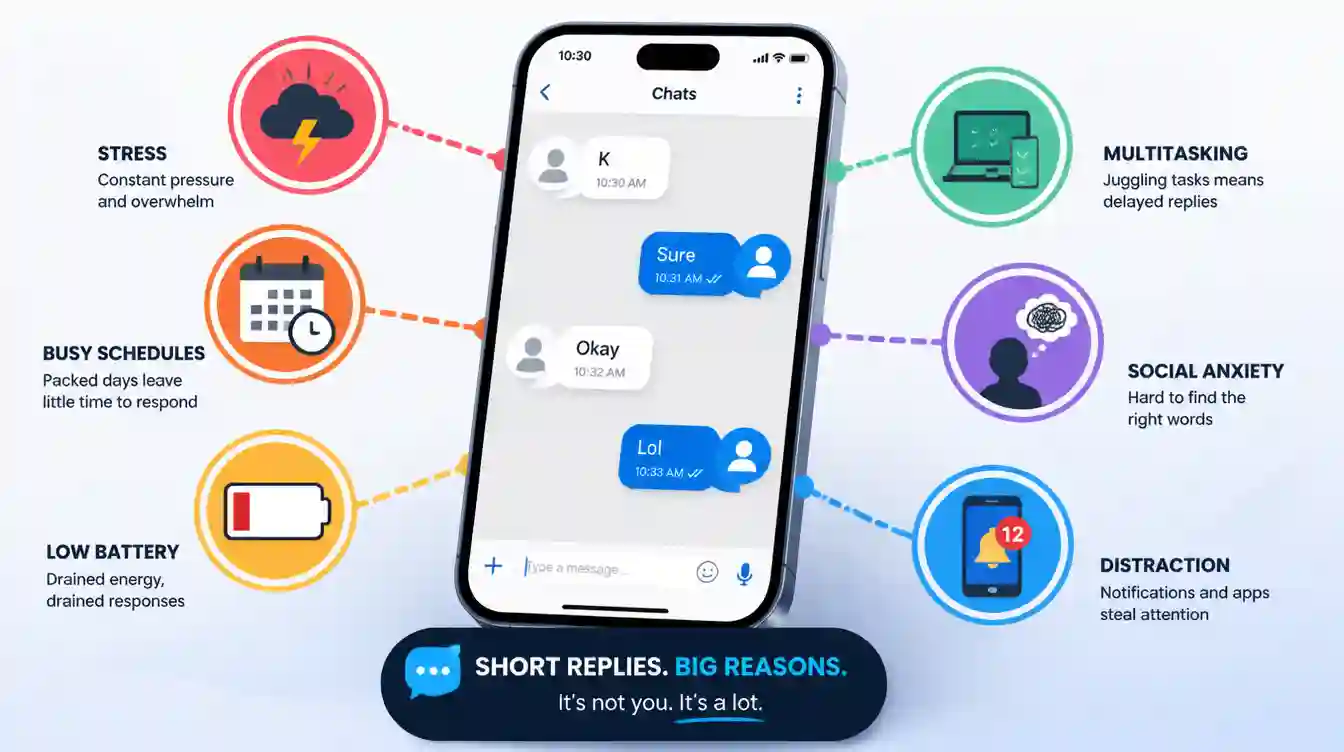
Most of the time, it genuinely isn’t about you.
Dry texting usually signals something going on with them — and once you understand what that might be, it stings a lot less.
Busy and Mentally Occupied
When someone has a packed day, their replies often shrink to a few words.
They still want to chat with you, but their brain is stuck on deadlines, errands, or chores, so you get a quick “yeah” instead of their usual warm message.
Naturally Brief Communicators
Some people text this way with everyone they know. They see messages as quick notes, not long heart-to-hearts.
A dry texter like this isn’t being rude to you at all. They save their energy and personality for calls or hanging out in person.
Lost Interest in the Conversation
Sometimes a short reply means the topic stopped grabbing them. They might still like you as a person, yet this chat feels flat to them now.
When that happens, their answers get shorter, and they stop asking you anything to keep things going.
Feel Emotionally Drained
After a rough day, even the most communicative people go quiet.
Replying to messages takes more mental bandwidth than it looks like from the outside, and when someone’s tank is empty, you often get their leftover energy, not their best.
Unsure What to Say Next
Not everyone knows how to keep a chat flowing smoothly. Some people freeze up and worry about saying the wrong thing to you.
So they fall back on safe, short replies like “haha” or “nice,” hoping that keeps the conversation alive.
They are Multitasking
People often text while doing three other things at once. They could be cooking, watching a show, or finishing up work tasks.
Their mind is split, so the reply you get feels rushed and thin. They aren’t ignoring you, just juggling too much.
They Prefer Face-to-Face Conversations
Plenty of people come alive in person but go quiet over text.
They find typing slow and a little awkward compared to talking. So the dry texter’s meaning here is that they’re saving their best chat for when you both meet up.
Responding Out of Obligation
Sometimes a person replies only because they feel they should. The warmth has faded, but they don’t want to seem rude by ghosting you.
So you get polite, short answers that keep the peace without putting any feeling behind them.
Experiencing Anxiety or Social Burnout
Talking can feel heavy when someone is anxious or worn out from people.
Even a simple text might drain them more than you’d expect, so they keep replies short to protect their energy, not because they’ve stopped caring about you.
They Think Their Replies are Normal
Many dry texters have no idea they come across as cold. To them, a quick “ok” feels perfectly friendly and fine.
They’ve always texted this way, so the gap between what they mean and what you feel goes unnoticed.
Dry Texting Examples
Sometimes the easiest way to spot dry texting is to see it laid out plainly. You’ve probably been on the receiving end of a few of these.
Let’s look at some examples so you can recognize the pattern fast.
The One-Word Wall
You write a long, excited message about your day, and they reply with a single “nice” and nothing more.
There’s no question back, so the chat just stops dead right there.
The Late and Lifeless Reply
They take six hours to respond, then send “ok.” The long wait, plus the brief answer, makes you feel like a low priority on their list.
The Echo with No Effort
You ask, “How was your weekend?” They say, “Good.” They never flip the question back to you, so the conversation has nowhere left to go.
The Dropped Thread
You share something funny or personal. They send “lol” or “haha” and let it die. No follow-up, no reaction, just a quiet end to your story.
The Minimal Emoji
You get a thumbs-up or a single emoji instead of words. It technically answers you, but it shuts the door on any back-and-forth.
Notice the common thread in all of these: the replies are short, closed off, and never hand the conversation back to you.
A dry texter rarely asks questions or adds detail. That’s the clearest sign you’re dealing with one.
Why do Humans Notice Dry Texts So Quickly?
Your brain is wired to read between the lines; with texting, you lose tone, facial cues, and body language.
So you cling to whatever’s left, a short reply suddenly feels loaded, and you start guessing what that “fine” really means.
You fill the silence with worry, and your mind treats the cold reply as a tiny social threat. That quick gut reaction is normal, and almost everyone feels it.
Is Dry Texting a Red Flag?
Sometimes, yes, but not always.
A single dry spell rarely means trouble on its own. The worry starts when the coldness never lifts. Pay attention when their words and actions don’t match up.
A true red flag is a steady pattern, not a one-off day. Trust what you see over time, and don’t ignore that gut feeling.
When Does Dry Texting Mean Disinterest?
Not every dry reply is a bad sign, but a steady pattern can point to fading interest. When all these stack up together, the dry texting probably means disinterest.
One sign on its own doesn’t mean much. But if you’re ticking off most of this list, it’s worth paying attention to.
- They never start the chat: You’re always the one reaching out first. They just reply and put in zero effort.
- They kill every topic: No questions, no follow-ups, just dead-end replies that go nowhere.
- They light up for others: Their texts to other people stay warm, but yours stay cold.
- The pattern never breaks: Busy days come and go, yet their replies stay cold every single time.
- They make no plans: They never suggest meeting up or calling you.
How to Text a Dry Texter?
So you’ve spotted the short replies; now the smartest move is to stay calm and avoid overthinking every word.
Don’t double-text or fire off five messages to fill the silence that usually pushes people further away.
Instead, try matching their energy for a bit, and keep your replies light and breezy, too.
You can also ask an open question that’s easy and fun to answer. If things stay flat, give it some space and shift your focus elsewhere.
Above all, don’t chase what isn’t coming to you naturally.
That’s easier said than done — especially when you like someone — but someone genuinely interested will meet you halfway without needing to be pulled there.
How Does Dry Texting Affect Relationships?
Dry texting might seem harmless, but it slowly chips away at a bond.
When replies stay cold, you start to feel unwanted and unsure, and you begin reading into every short word, looking for hidden meaning.
That guessing game breeds doubt, and doubt breeds distance.
Over time, one person feels ignored while the other has no clue, so small frustrations pile up and turn into resentment.
Communication is the glue of any relationship, and dry texting weakens it. The spark fades, and conversations become a chore instead of a joy.
Left unchecked, this pattern can quietly push two people apart.
End Note!
Dry texting isn’t always a red flag, but it can be one.
The whole thing comes down to patterns and context. Now you know how to read the dry texter meaning instead of panicking over every reply.
That matters because your peace of mind shouldn’t hinge on a one-word text.
You deserve people who meet your energy, not leave you guessing, so pay attention to what they do over time, and trust your gut when something feels off.
Want to keep building healthier connections? Check out our guide and learn to spot the signs early.
Frequently Asked Questions (FAQs)
1. Can Dry Texting Happen in Group Chats too?
Yes. In group chats, dry texting often appears as minimal participation, delayed reactions, or brief responses that add little to the ongoing discussion.
2. Does Age Affect How People Text?
Sometimes. Younger users may rely on emojis, memes, and quick replies, while older users may prefer concise texts without intending to seem distant.
3. Can Dry Texting be Caused by Texting Fatigue?
Yes. Constant notifications and digital communication can create texting fatigue, making people respond with shorter, less engaging messages.
