
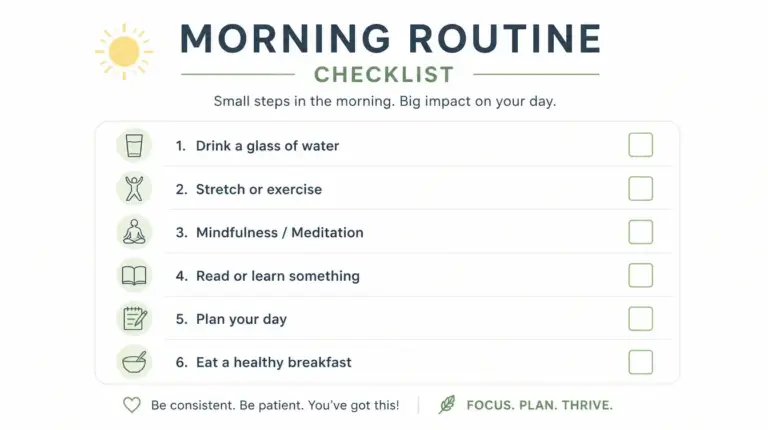






Mornings are hard. Most people hit snooze three times, skip breakfast, and rush out the door feeling behind before the day even starts.
Sound familiar?
Here’s what’s actually going on: a rushed, reactive morning doesn’t just make you tired — it sets an anxious baseline that follows you into everything else.
Your mood, your patience, how you show up for the people you care about.
A simple checklist won’t fix your life, but it can interrupt the spiral before it starts.
Why Sleep is Important
Sleep is genuinely the foundation here, not in a “you’ve heard this before” way, but because the version of you that shows up after a bad night is just different.
You’re shorter with people. You’re more reactive.
The CDC recommends seven to nine hours for adults, and research consistently links poor sleep to higher emotional reactivity — which, if you’re trying to maintain any kind of relationship, matters more than most people realise.
A good morning routine starts the night before.
Things to do After Waking Up
Starting the morning the right way takes intention. These simple habits can make a real difference when added in daily routine.
1. Drink a Glass of Water
You’re mildly dehydrated every single morning. That’s just biology.
A full glass of water before your phone, before coffee, before anything else helps shake off that heavy, foggy feeling faster than most people expect.
Keep a glass on your nightstand the night before so it’s the first thing you reach for, not your screen.
2. Make the Bed
It sounds small, but making the bed first thing gives an instant sense of order. It signals to the brain that the day has started with purpose.
If you’ve ever had a rough night – an argument you haven’t resolved, an anxious brain that wouldn’t switch off — coming home to an unmade bed at the end of the day makes everything feel heavier.
It’s a small thing, but it’s yours to control.
3. Move the Body
A short stretch, a quick walk, or a few minutes of light exercise gets the blood flowing. It shakes off morning stiffness and boosts energy levels naturally.
Movement in the morning also lifts mood and sharpens focus for the hours ahead. It doesn’t have to be a full workout even ten minutes makes a difference.
4. Eat a Nutritious Breakfast
Skipping breakfast leaves the body running on empty.
A balanced meal with protein, healthy fats, and fiber fuels both the brain and the body.
And if mornings are already stressful, sitting down to eat (even for ten minutes) is one of the few things that actually signals to your nervous system that you’re not in crisis mode.
5. Review the Day’s Plan
Taking a few minutes to look over the day’s tasks brings clarity and focus. It helps set priorities and reduces the chance of forgetting something important.
Knowing what the day holds makes it easier to stay calm and organized.
A quick scan of a to-do list or calendar is all it takes.
These five habits form the foundation of a strong daily routine checklist. Building them one at a time makes them easier to stick with over the long run.
Things to Avoid in The Morning
Not everything that feels natural in the morning is actually helpful. These habits can quietly drain energy and throw off the entire day.
1. Hitting the Snooze Button
It feels good in the moment, but hitting snooze does more harm than good. Those extra few minutes of broken sleep leave the body feeling groggier, not more rested.
It also cuts into the morning routine and creates a rushed start. Setting one alarm and getting up right away is a much better habit to build.
2. Scrolling Through the Phone
Reaching for the phone in the morning pulls the mind straight into notifications, news, and social media. This floods the brain with information before it has had a chance to wake up properly.
It also triggers stress and distraction early in the day. Keeping the phone face down for the first thirty minutes of the morning makes a noticeable difference.
4. Checking Emails First Thing
Opening emails right after waking up shifts the focus to other people’s priorities before the day has even begun. It creates a reactive mindset instead of a focused one.
Starting the morning on someone else’s terms makes it harder to stay on track with personal goals and tasks. Emails can wait until after the morning routine is complete.
Avoiding these habits protects the tone and flow of the morning. A checklist works best when these common pitfalls stay out of the picture.
Why a Daily Routine Checklist Matters
A checklist does more than just list tasks. It gives the day a clear starting point. When the morning runs smoothly, the rest of the day tends to follow.
Without a plan, small decisions like what to eat, what to wear, what to do first consume a lot of time and mental energy. A checklist removes that guesswork.
It builds healthy habits over time and reduces daily stress. People who follow a set morning routine feel more focused, more productive, and far less overwhelmed by the time they sit down to work.
Morning Routine Checklist
Here is a simple checklist to follow every day. Save it, take a screenshot, or print it out and stick it somewhere visible.
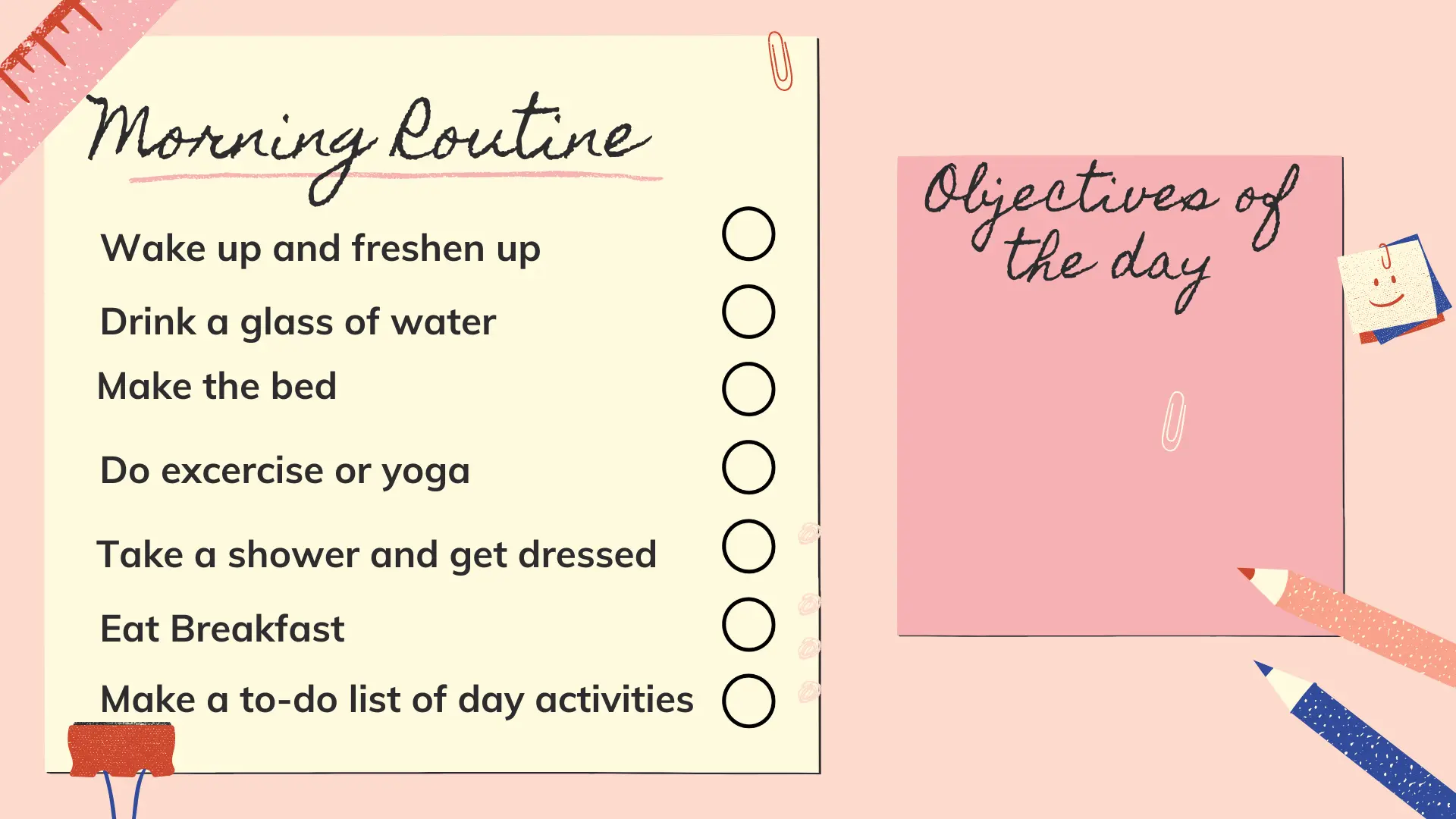
This checklist covers all the basics needed for a calm, focused start to the day. Adjust it to fit personal needs and make it a non-negotiable part of every morning.
Conclusion
A good morning routine doesn’t have to be aspirational — it just has to be yours.
Start with one thing. The water glass. The bed. The ten-minute walk. Stack them slowly and let them become automatic.
The goal isn’t a perfect morning. It’s a morning that doesn’t cost you the rest of the day.
Frequently Asked Questions
1. How Did Successful People Like Tim Cook or Oprah Winfrey Build Their Morning Routines?
Both prioritize early rising, exercise, and planning. Their structured mornings show that consistency and intention are the foundation of lasting success.
2. Which Vitamins Help with Morning Energy Levels?
Vitamin b12, vitamin d, and magnesium support energy production, mood, and focus. Taking them daily can make mornings feel less draining.
3. How Can Someone Stay Motivated to Follow a Routine Checklist Every Day?
Starting with just two or three small habits builds consistency. Tracking progress daily keeps motivation strong and the routine feeling rewarding.
